I)
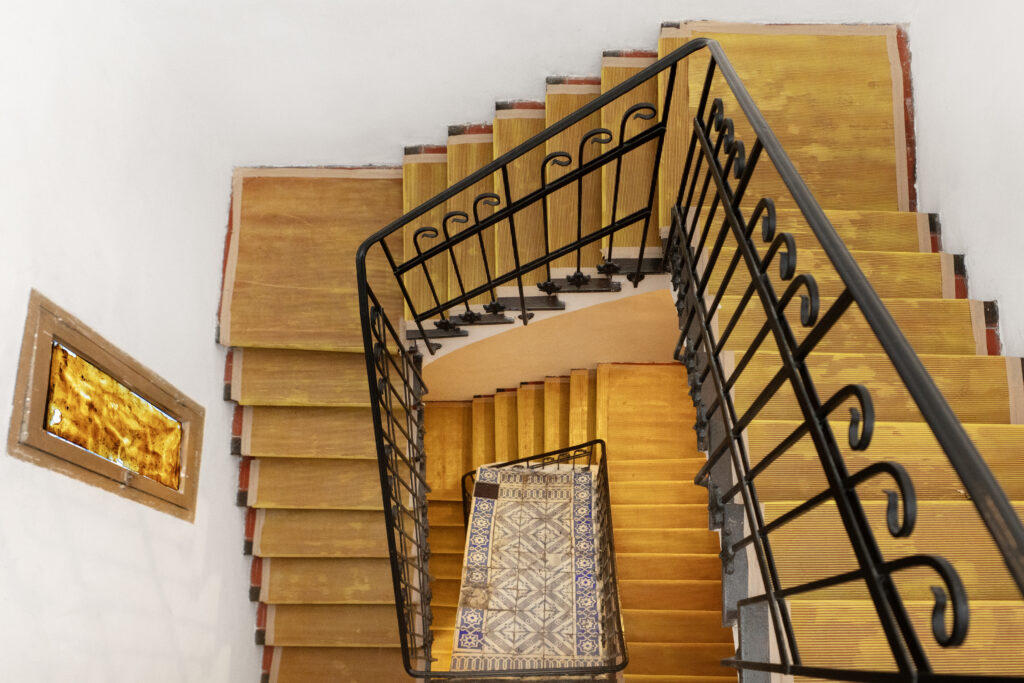
When I was little, I used to come to this house to eat every weekend. The entrance gate was almost always open, and I just had to walk down the entrance hallway and wait for them to open the downstairs gate with the intercom. I’d turn the corner and go up the stairs. There was a warm, yellowish light that gave way to outdoor light as I ascended. My grandmother would be waiting for me upstairs, leaning over the railing. While lunch was being prepared, I would sit and chat with my grandfather in one of those modest armchairs, like those found in a typical grandparent’s home, which theirs was; it was made of a foam rubber that made you sink into it until it almost embraced you when you sat down, and it was covered with burgundy fabric that tried to imitate expensive leather that only a family of high social standing could afford. In the background, one of those boring documentaries played on TV, livening up my grandfather’s sips of cheap wine, and through the windows, light continued to stream in, a homey light. I remember I never listened to what my grandfather told me; I kept my gaze fixed on any fixed point in front of me, and that was enough to make me feel comfortable. All sorts of trinkets were scattered throughout the house, many of them sharing that taste for industrial manufacturing aesthetics, made of cheap plastic trying to mimic the texture of silver or gold. And although they had no value whatsoever, the attachment my grandparents had to them and the care with which they had treated them – displaying them and selecting the exact location in the apartment where they wanted them to be seen as if they were part of a carefully curated art collection – endowed them with a much greater value than they might have originally possessed. In houses like this, decoration based on souvenirs and imitation was an inherent foundation of the feeling of welcome. The intentionally feigned luxury (and necessarily dictated by a certain social reality) allowed for the recreation of an aesthetic that very finely captured the synthesis between the sumptuous and the modest, between the sophisticated and the precarious, like a sort of small palace of bric-a-brac, not only useless but false, in which a disconnect between form and reality was revealed, often identified with kitsch style.
II)
In the ceremony celebrated by the Ponteleone family in The Leopard at their Sicilian palace, one of literature’s most evocative scenes of decadence can be appreciated. Amidst cracked plaster, candelabras, tapestries, and monumental furniture (that) recalled a magnificence now without function, a ball is held, gathering an aristocracy divided between the old, which had long maintained a lineage that seemed to be on the verge of collapse, and a new one, brought by the Risorgimento, destined to occupy the empty seats of their predecessors. And, who knows if to make the scene even more ironic, from among the crowd appears an officer who is given a voice to tell how convinced he is of the successful transition to the new order. The anecdote becomes a poetic element if we once again focus on the confrontation of reality and formality, that is, the confrontation between what truly is and what should be: the old aristocracy disappears, but there is another that, though not the same, is capable of acting as such.
Regarding the Italians, Futurist poetry, an enemy of the old, was a poetry of impact. Its words were noisy, strident, and its raison d’être was impact. They splattered images on the consciousness of whoever read them and jumped from one situation to another without rhyme or reason other than the emotion of evoking them. They blurred a homogeneous reality to tear it into many pieces. Reality was separate fragments, ripped from themselves until they suddenly collided in the reader’s mind. Here, it was no longer about harmonizing the new order with the old, but about reveling in the new world of modernity that had settled thanks to technological advances, in industry, armaments, mechanics, and machinery in general of the early 20th century.
III)
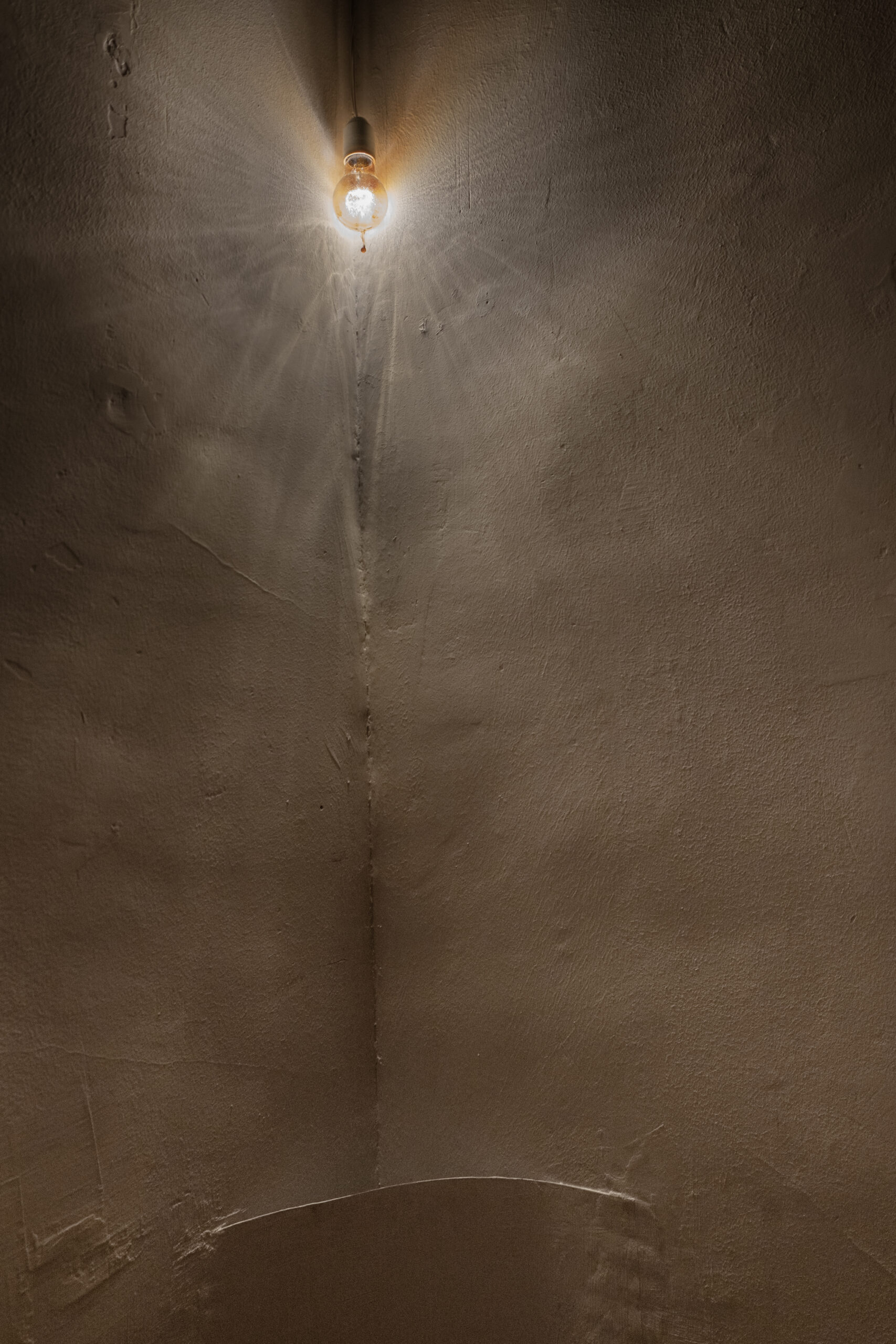
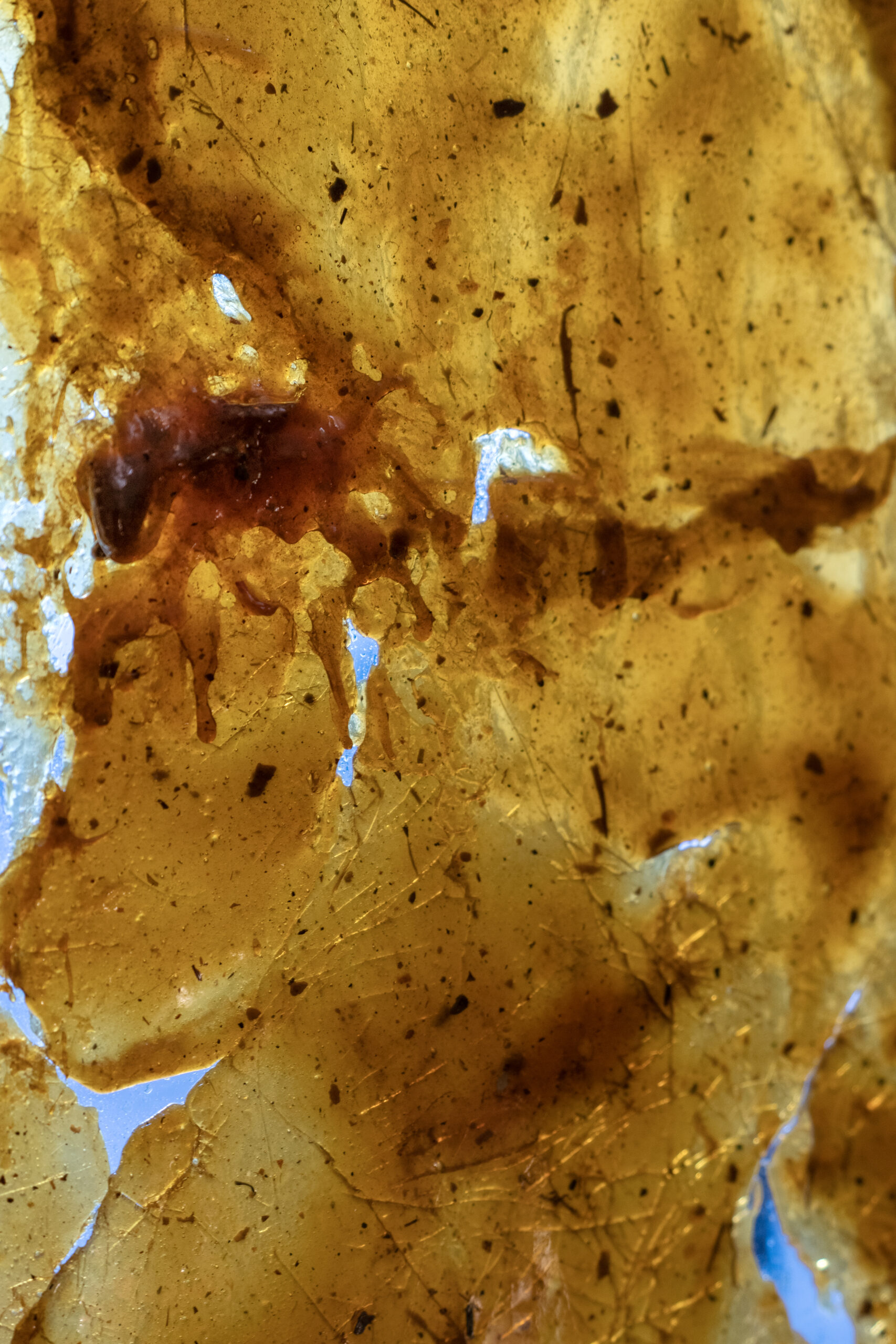
The precariousness and disposability of the material and the manipulation of the environment (light, smell, and sound) are the two axes around which this exhibition is articulated. The whole refers to itself as intentional fiction, a scenario designed for pretense using materials that act as what they are not and take as their essence aesthetically conjugated contradictions: the luxurious alternates with the decadent or the sophisticated with the mediocre.
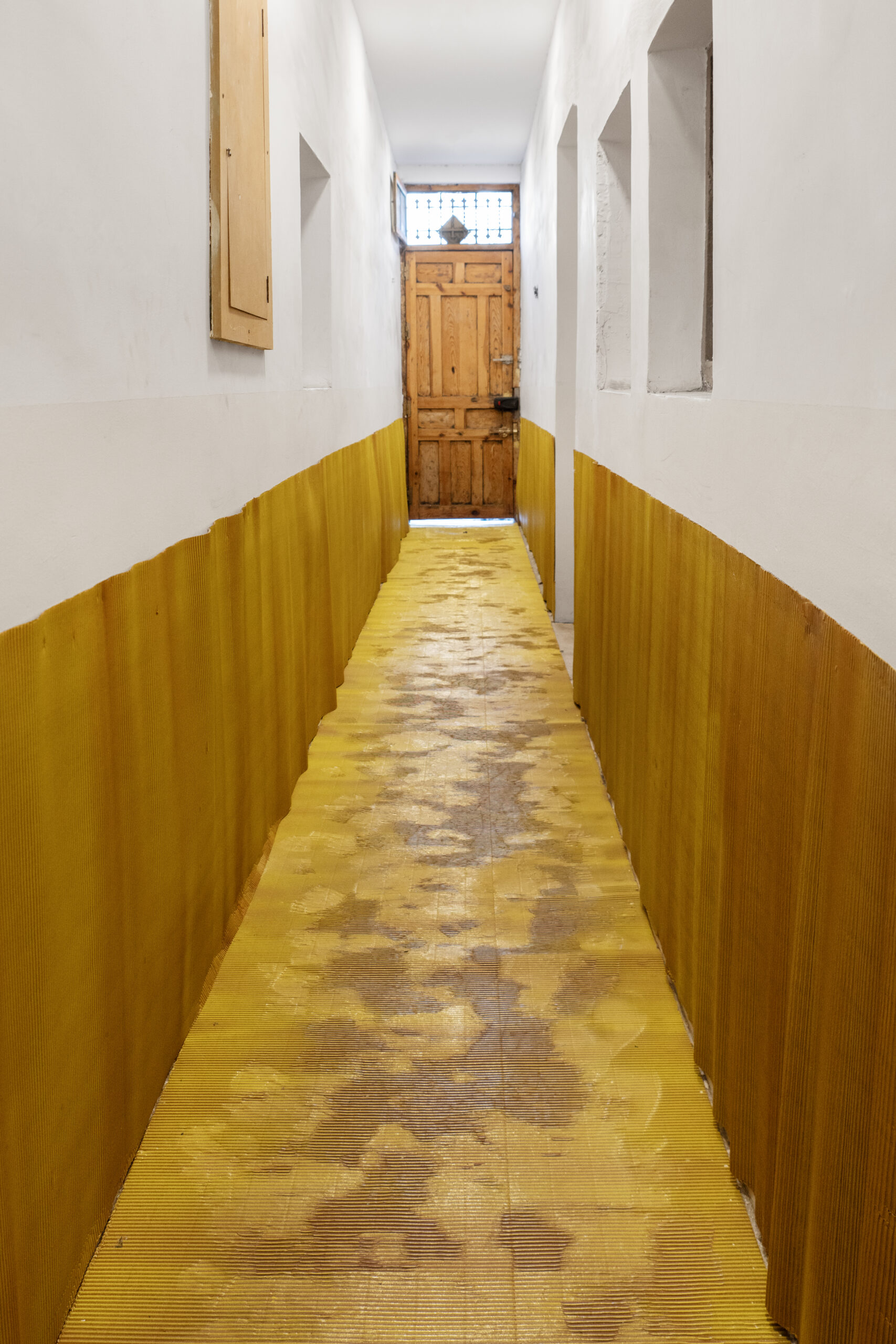
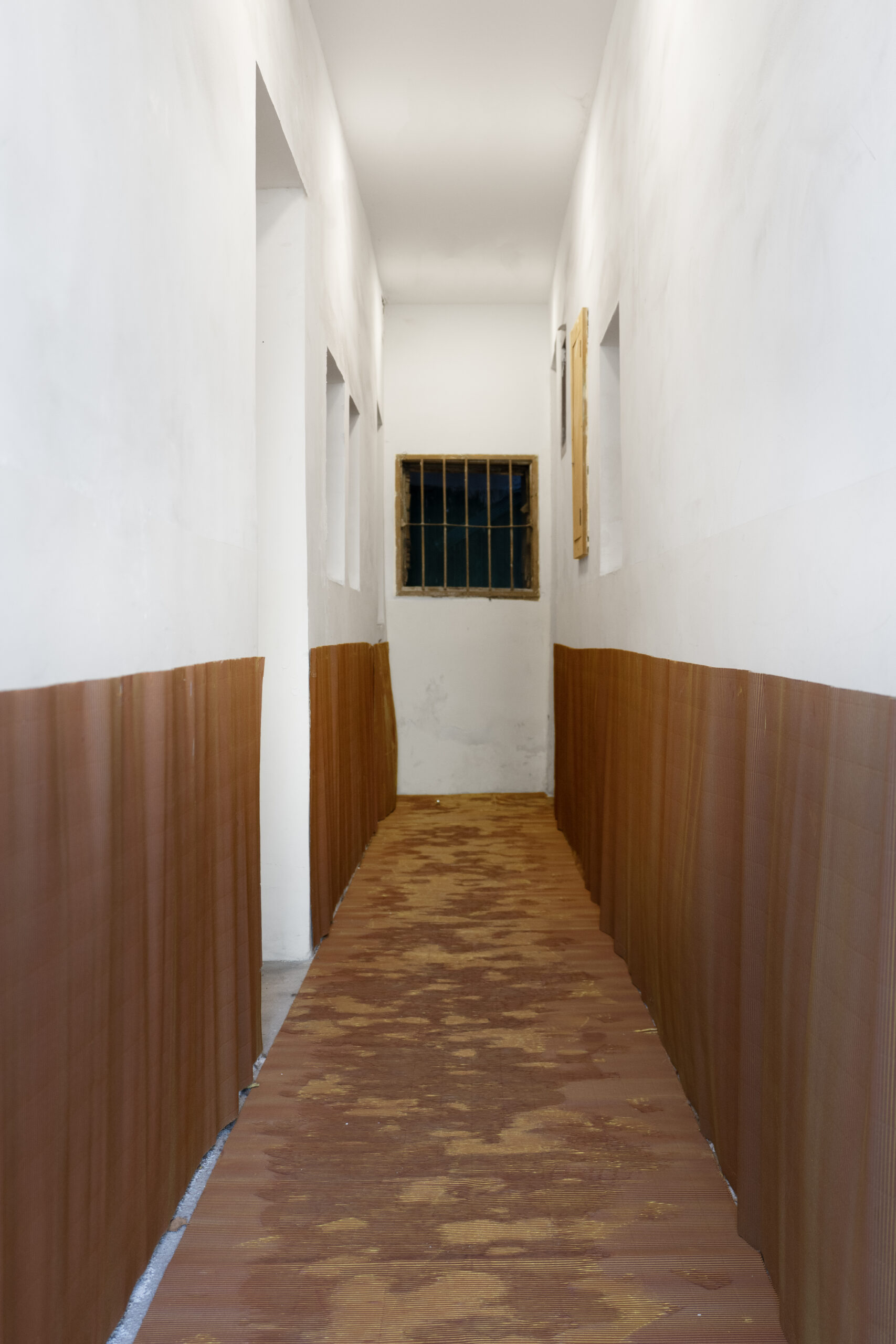
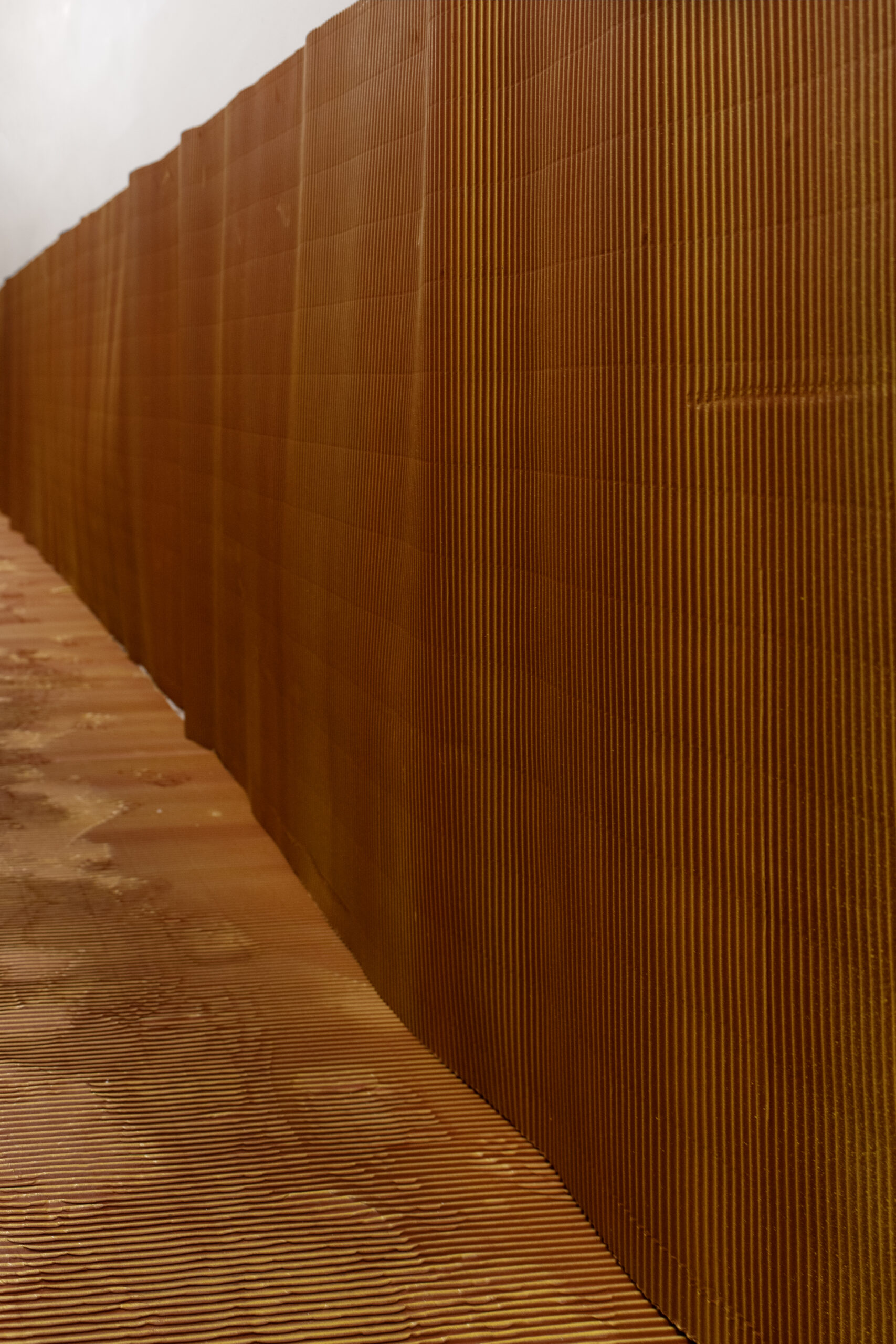
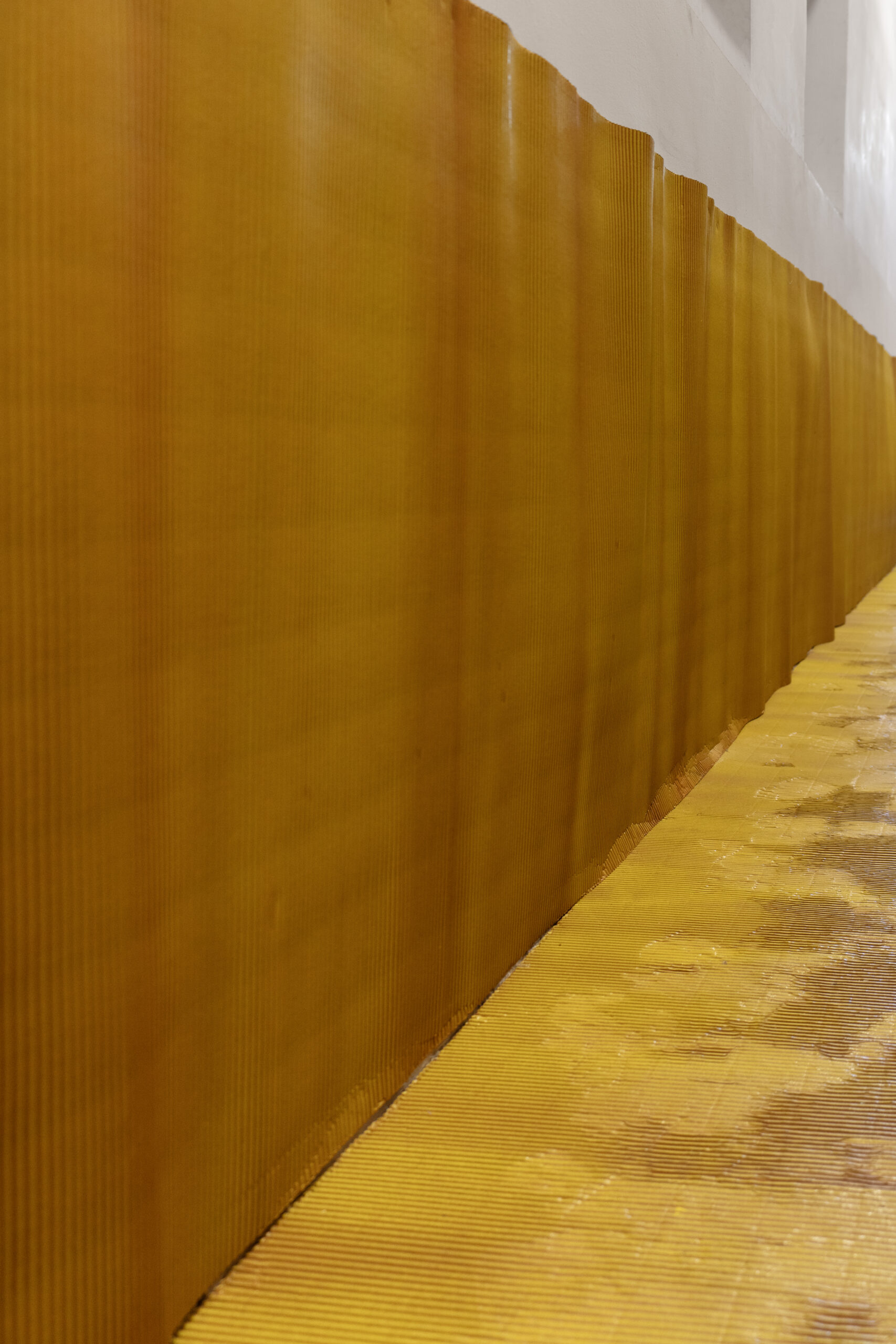
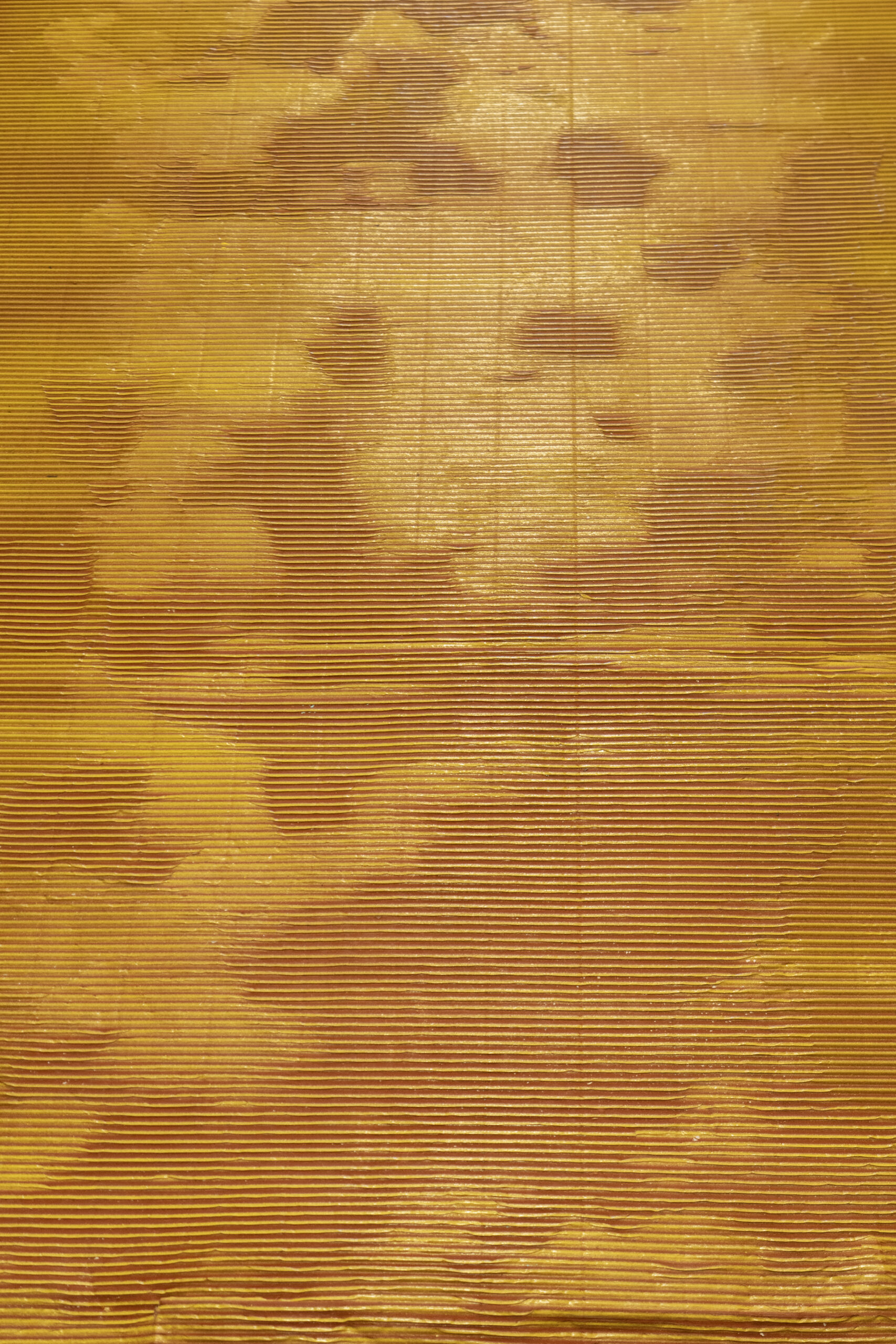
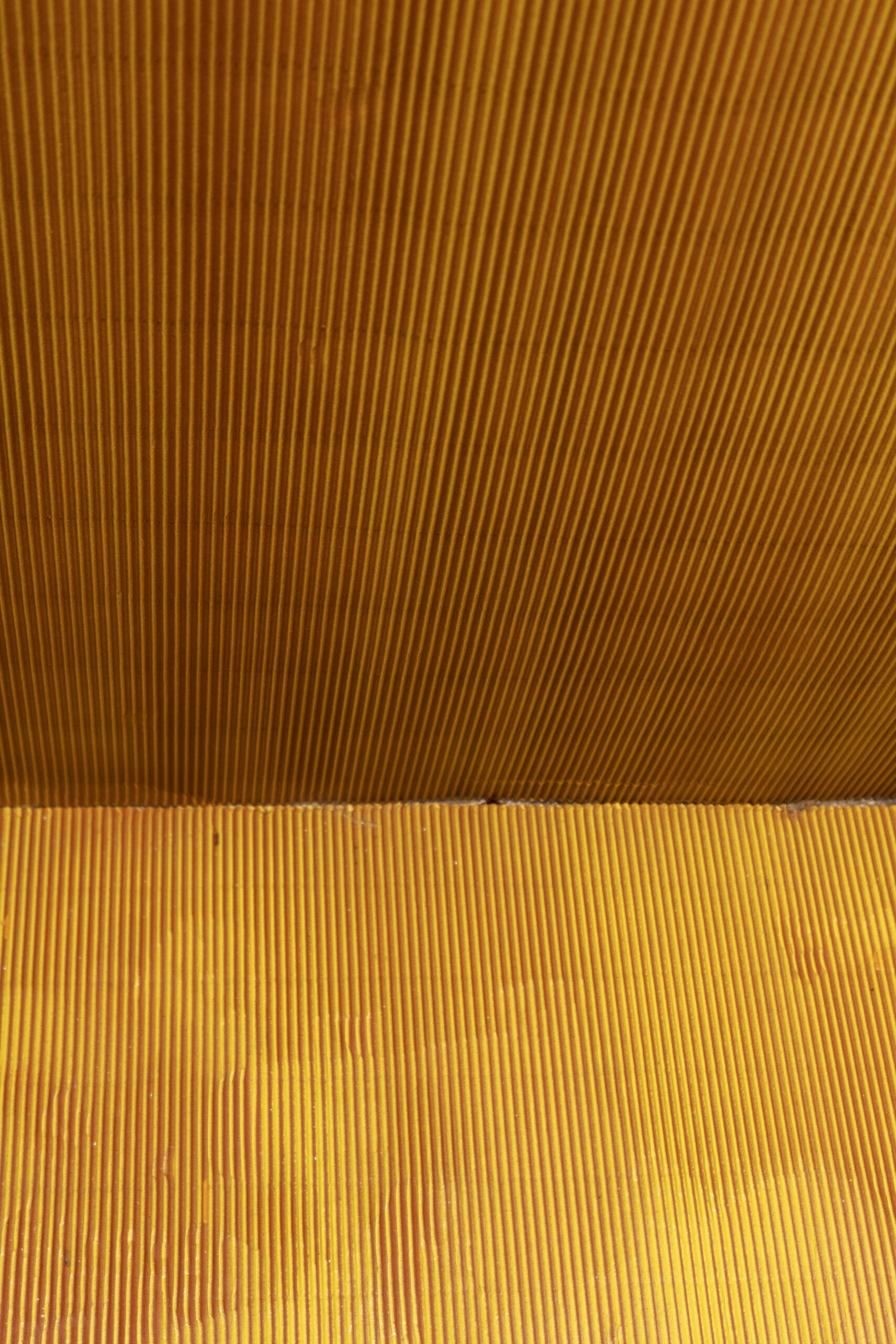
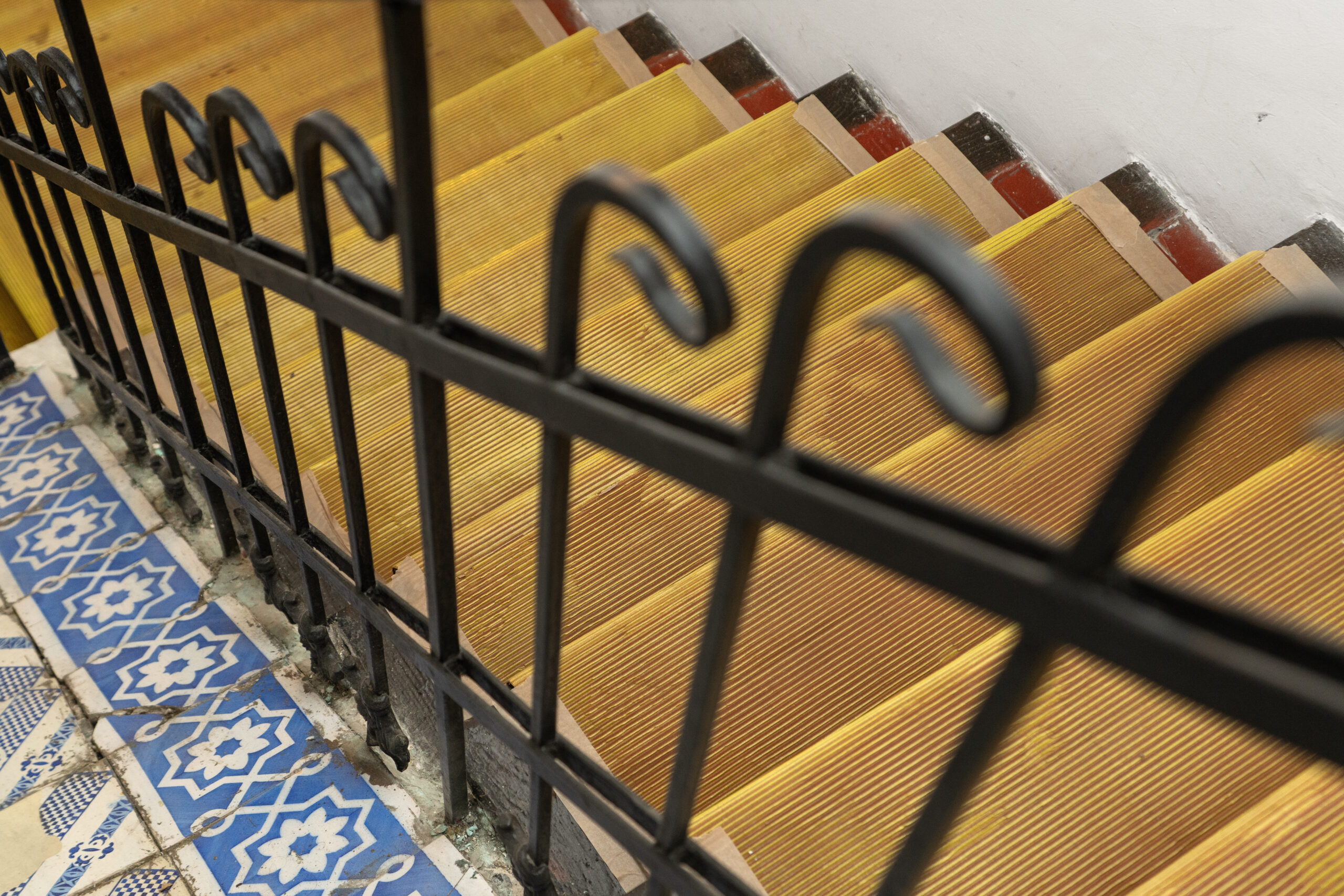
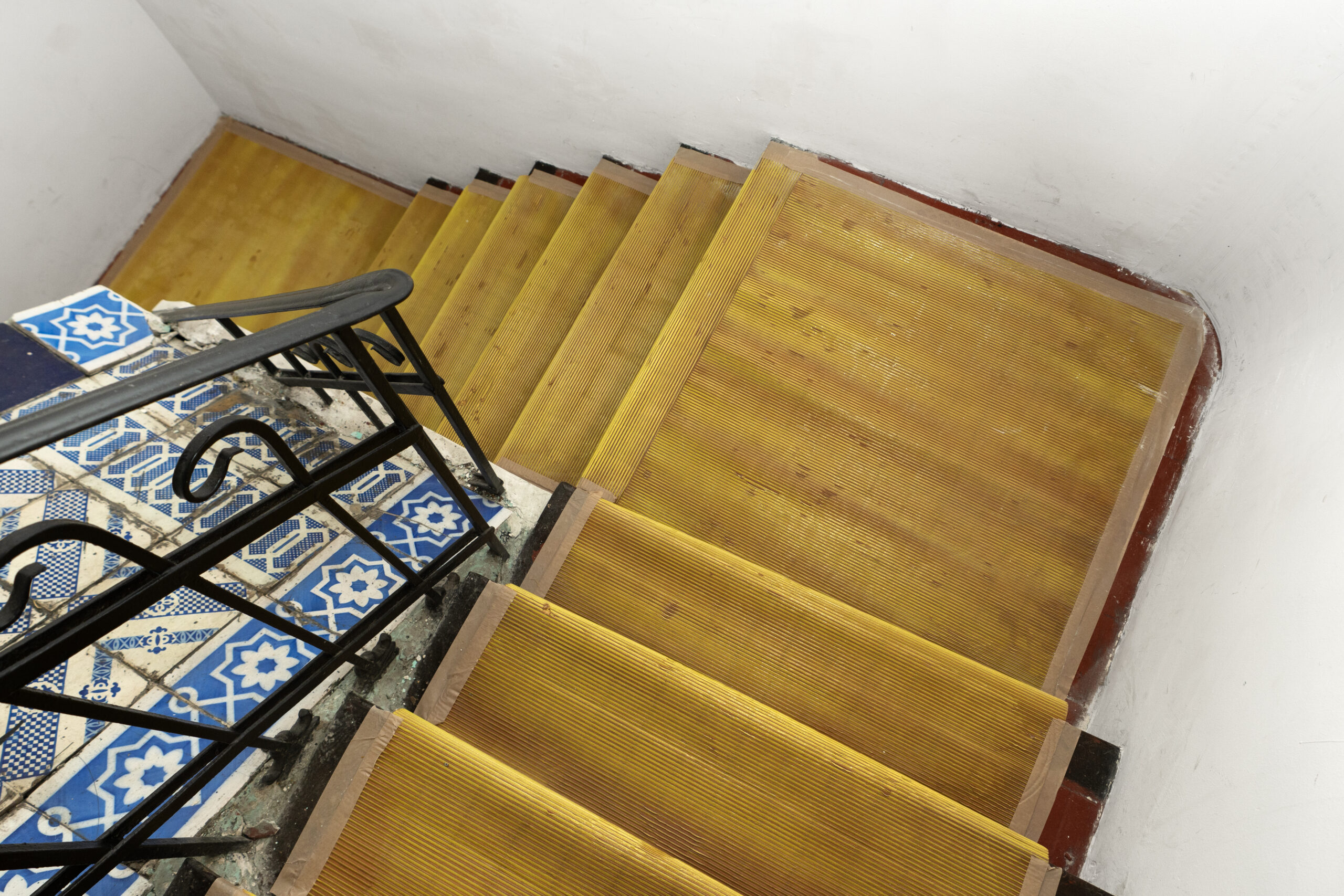
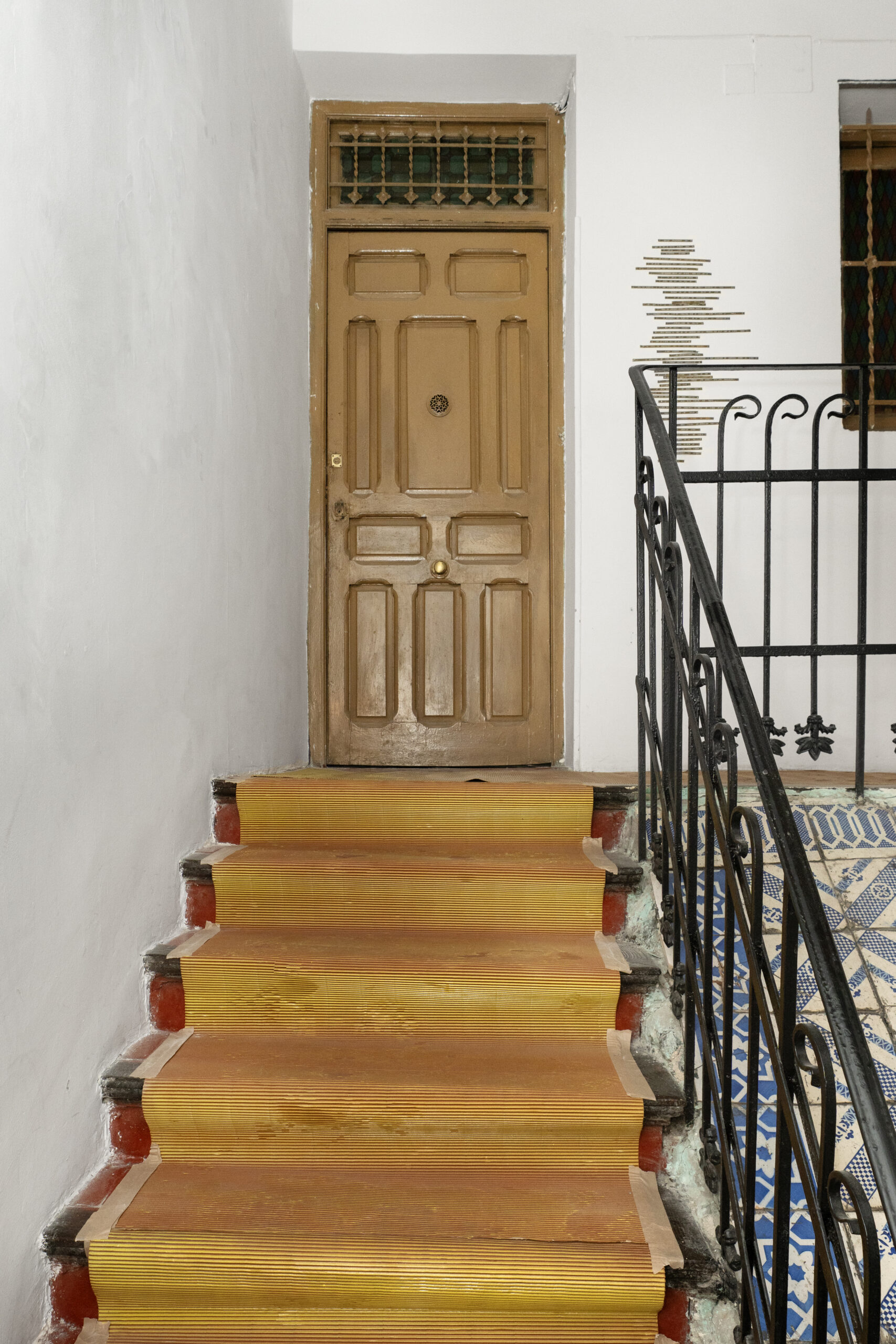
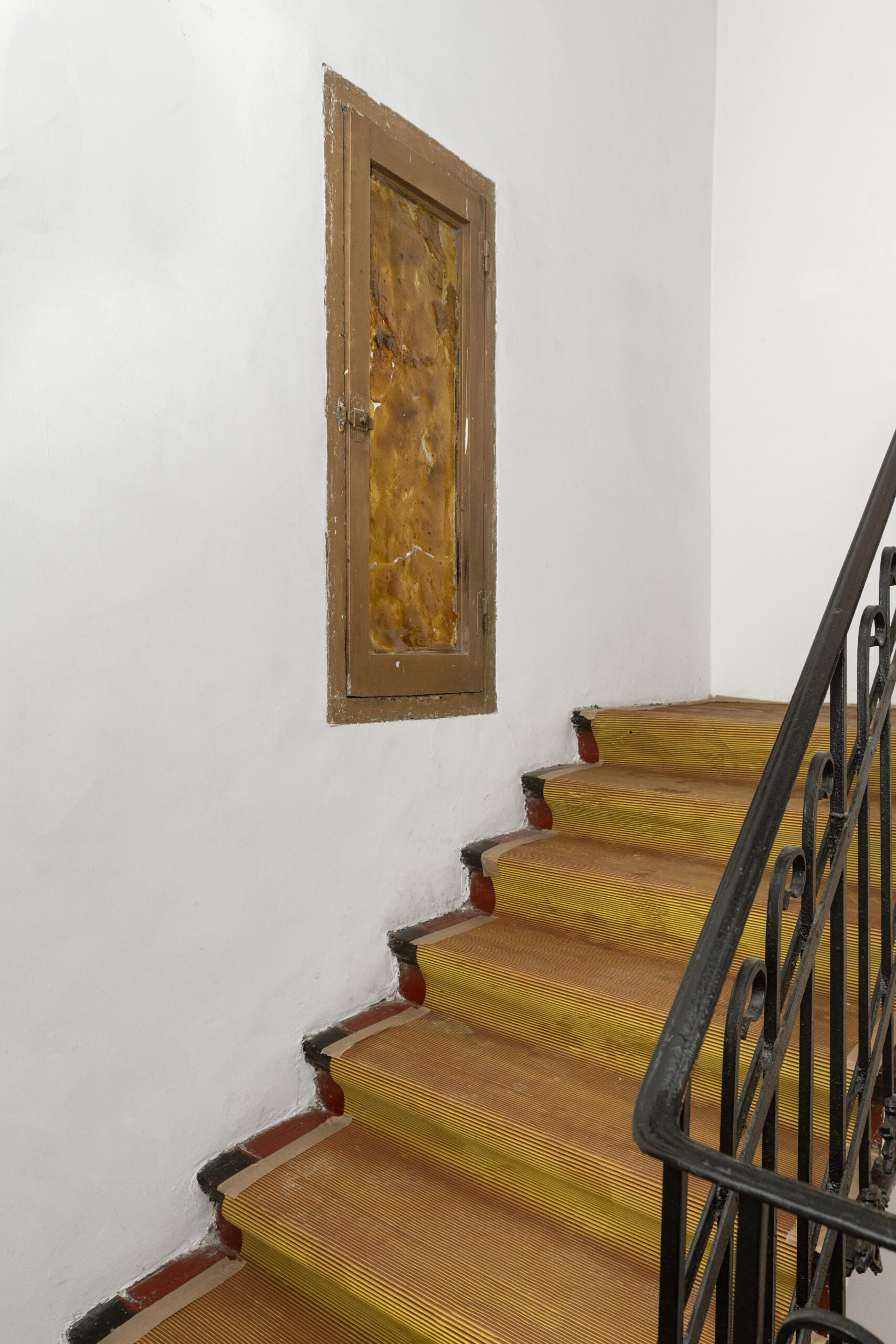
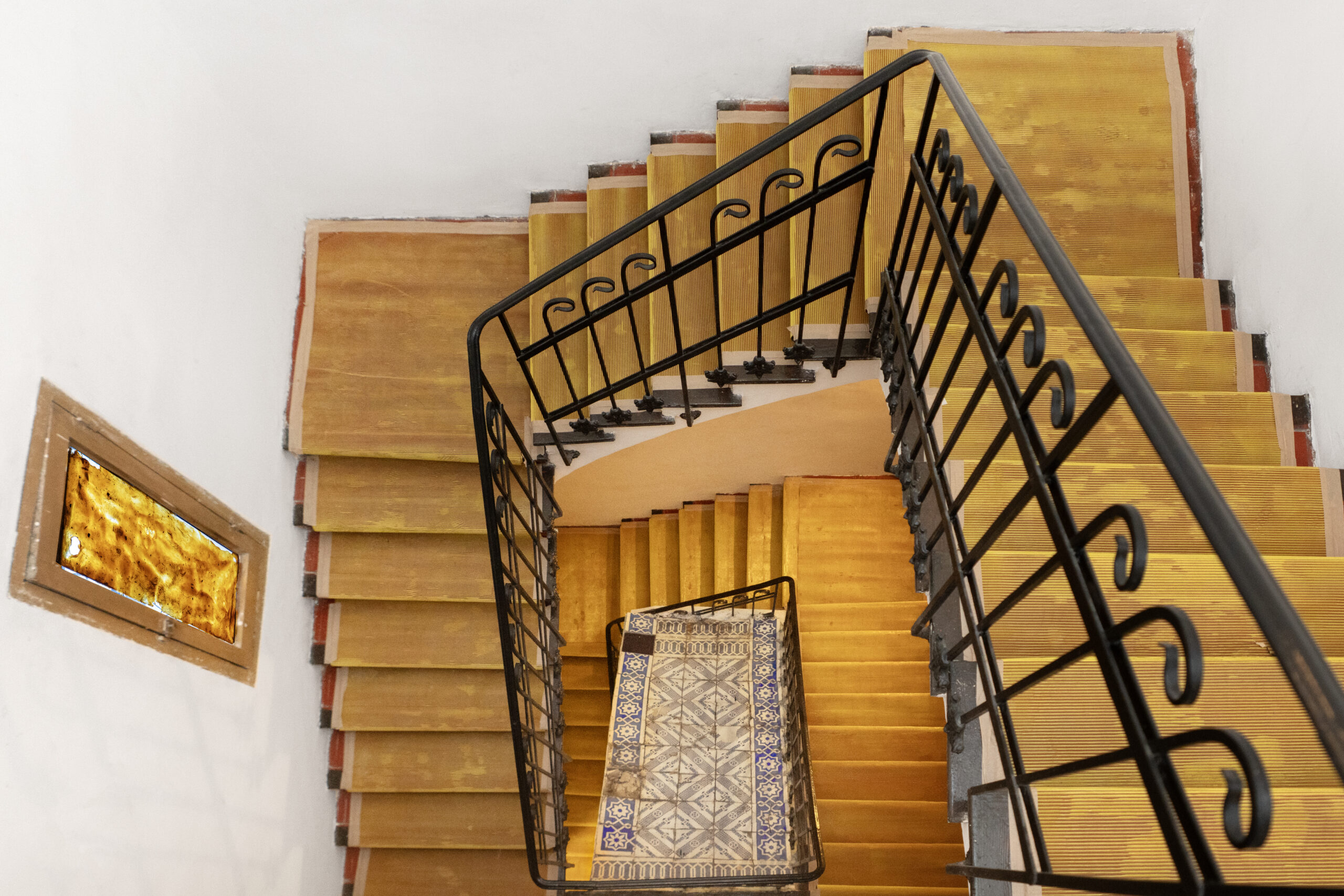
Pablo Capitán del Río’s velvety cardboard pieces are just that, cardboard, designed to absorb dust and cover floors and walls during construction, with the caveat that, formally, the piece has been painted in three colors to repeat the pattern of velvet fabrics. From now on, the cardboard is no longer just a simple construction cardboard, but has redefined its function based on its appearance. This metamorphosis of the material becomes more evident when the act of stepping and walking on this velvet carpet means that, once seen, it cannot be seen the same way again: the gold that is revealed when you leave turns brown when you look back, and vice versa.
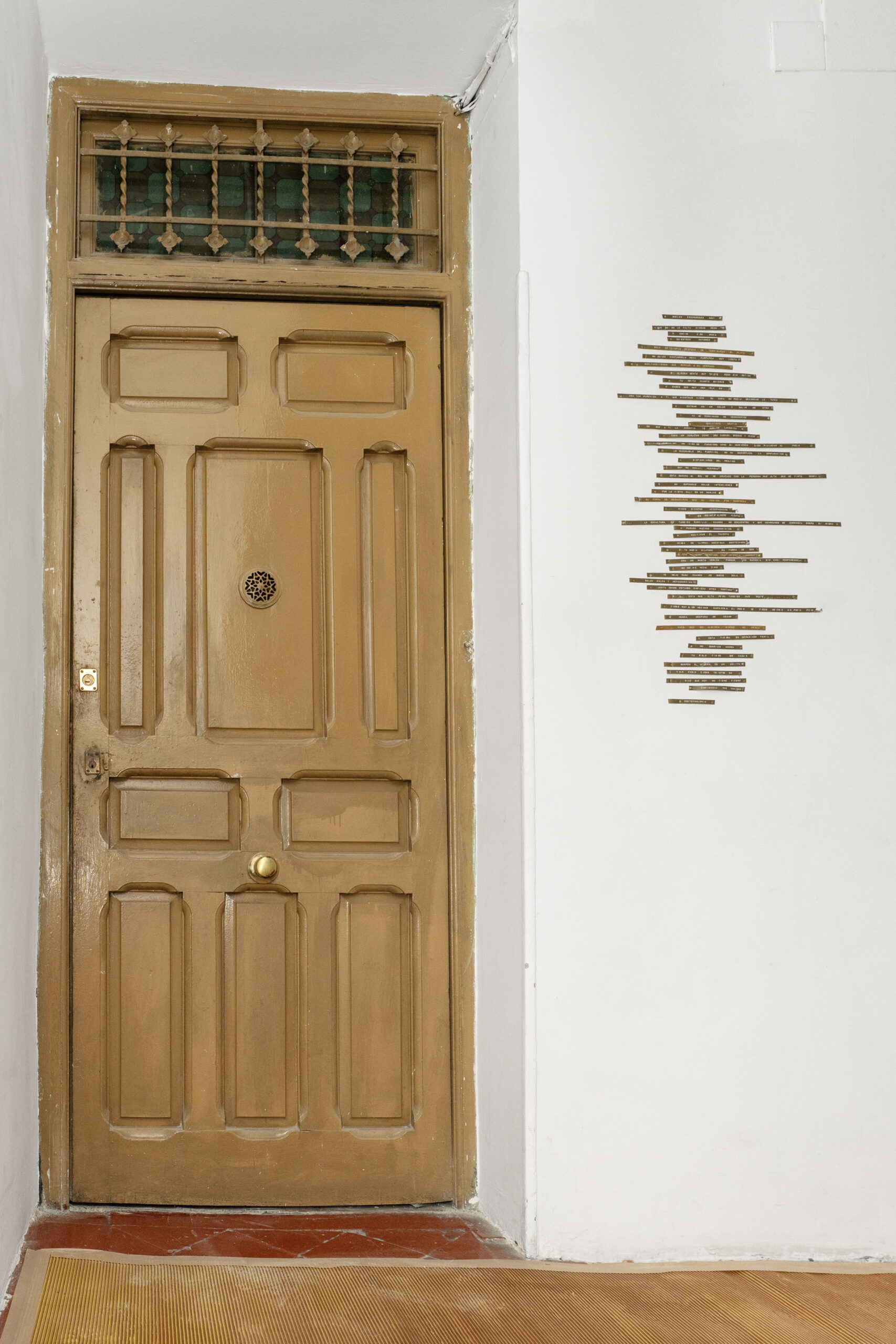
Extracted from a Dymo machine, Pablo Capitán del Río has nailed some phrases onto two walls of the building. These are phrases he has collected over the years, phrases that appear and intertwine. All of them have a scenic capacity, because they open a space for figuration. With them, a situation can be constructed suddenly, almost like an instant revelation. They serve as a pretext to search through memory, chain thoughts, and remain in daydreaming and distracted thought. Their statements can even provoke a certain sense of identity in the reader, referring to common places that we are able to imagine.
“Doble amarillo terciopelo golden” is one place or many at once. As many as the images that emerge from its phrases, and as many as the space is capable of suggesting. The proposal is explained from the specificity of a place that is intervened to imagine a new one where the possibility of redefining the perception of space fits just by directing the eye, and where the formal stability of what is seen is threatened by a constant sense of anomaly.
Pedro Huidobro