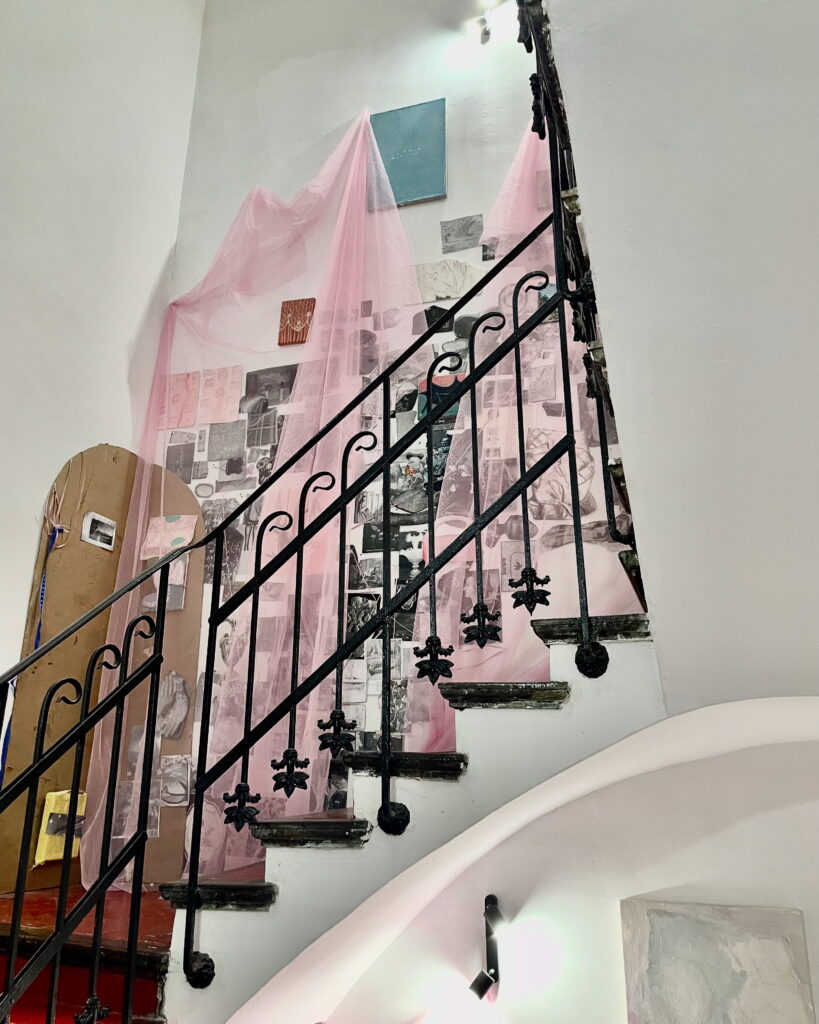
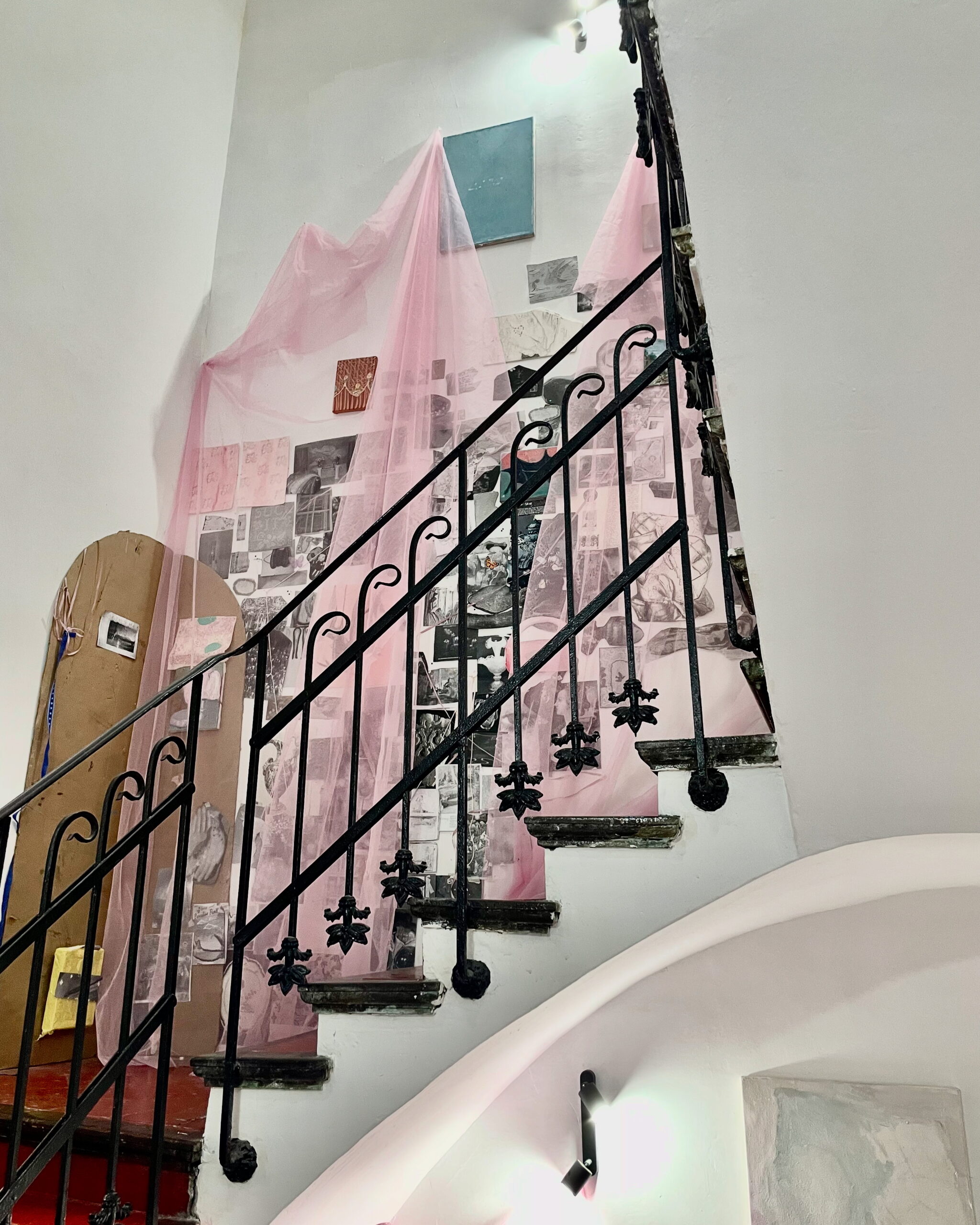


Lucía Tello’s (1996) work and creative process are tied to a constant reworking of the imaginary. Her painting can be described as made up of phantasmic images that come from another time and appear before us dragging their past along with them. She engages with landscapes, objects, portraits, flowers, ceramics, and many other references that speak to forms of materiality and to concepts that can freely be associated with them. Ultimately, these are forms that seem to exist in a kind of limbo—between representation and reality, between real and imagined objects, between the archive and the visual instant.
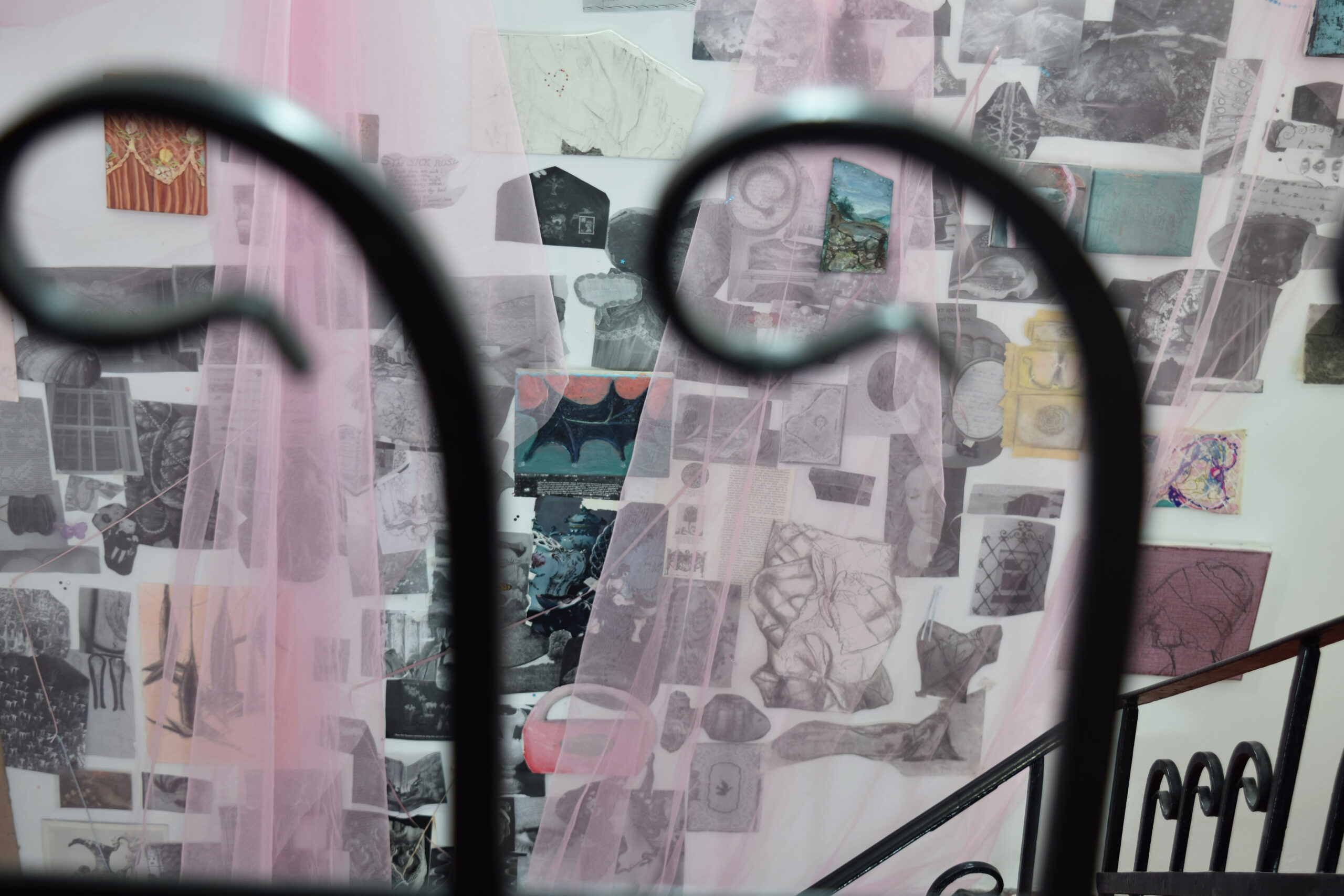
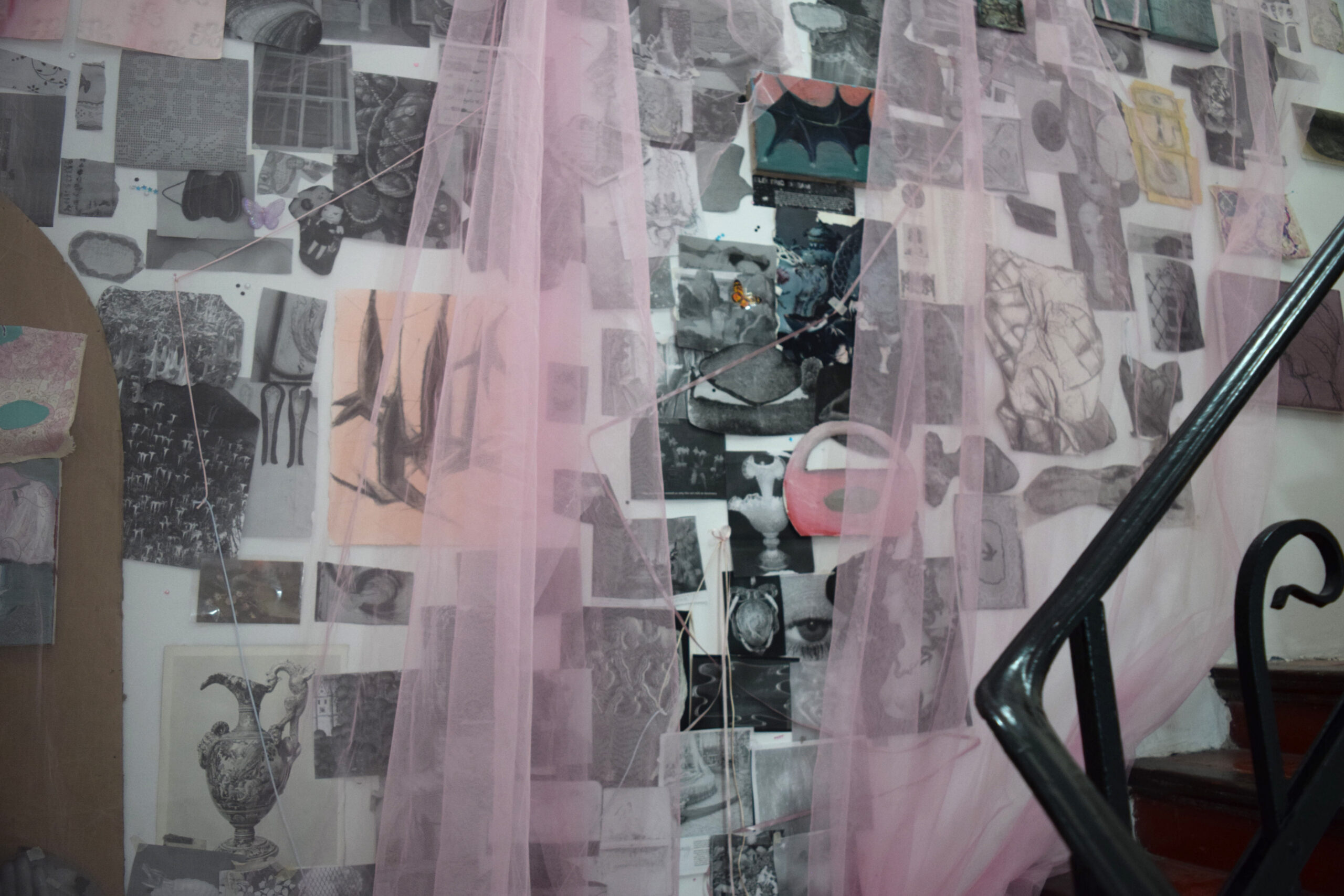
On these two walls, some of the constituent elements of the before (archival documents) and the during of her work (painting) are displayed, in the manner of a kind of altarpiece that incorporates different narratives, shapes, and volumes within a single structure. This altarpiece can only be fully seen when one reaches the very top and then directs one’s gaze downward, as one would before a Descent from the Cross, which here has shifted its definition from the realm of subject matter to that of the visual gesture.
As with Warburg’s panels, the images seek one another out and reference each other, maintaining visual affinities within an optical game that always remains open. From this intention of placing images and their representations into a dialogue that reinforces the idea of forms that survive and traverse time, we encounter representations caught between strangeness and familiarity. In Lucía’s work, we can recognize processes that are both conscious and unconscious: formal and emotional borrowings, remembrance and forgetting, assimilations and reversals of meaning, sublimations and alterations.
Pedro Huidobro