I)
Time has ceased to be a place. We do not know what awaits us within it nor, even worse, after it. And for this utilitarian notion of things, it is unsettling not to know what something is for. To say that something is expected from time is the same as turning time into a projection, burdening it with connotations of the future. History can be understood as a device for organizing futures, one that feeds on hopes, on the fulfillment of things spoken from a present that expects to be compensated later on. History would not exist without promises. Salvation is a promise, and revolution is one as well; the only difference between them lies in where what is promised is fulfilled—whether in the hereafter or in the here and now.
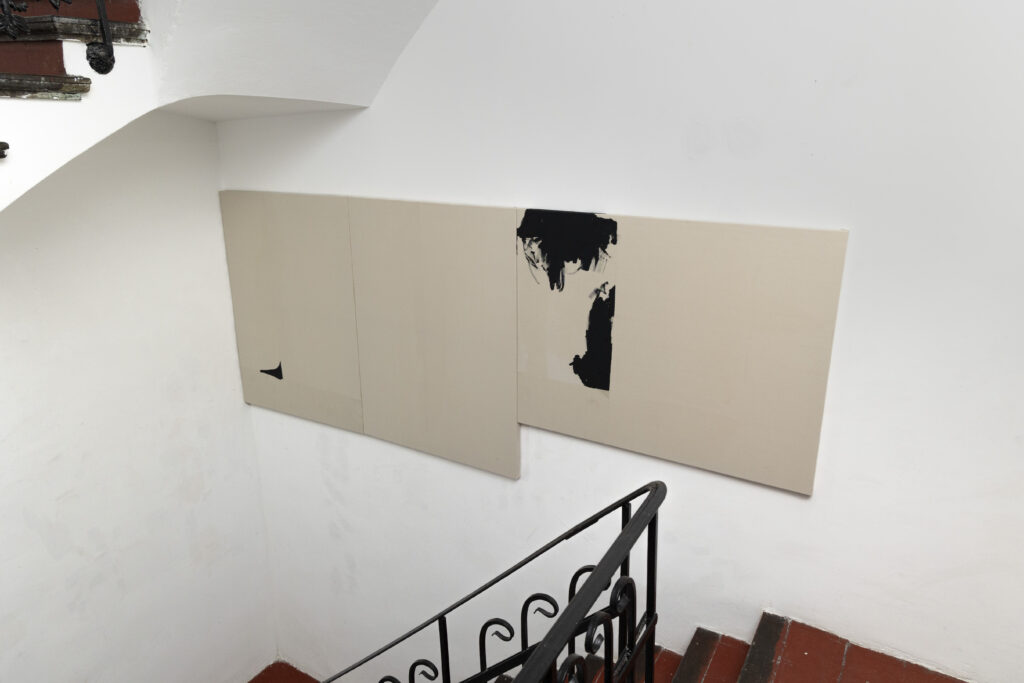
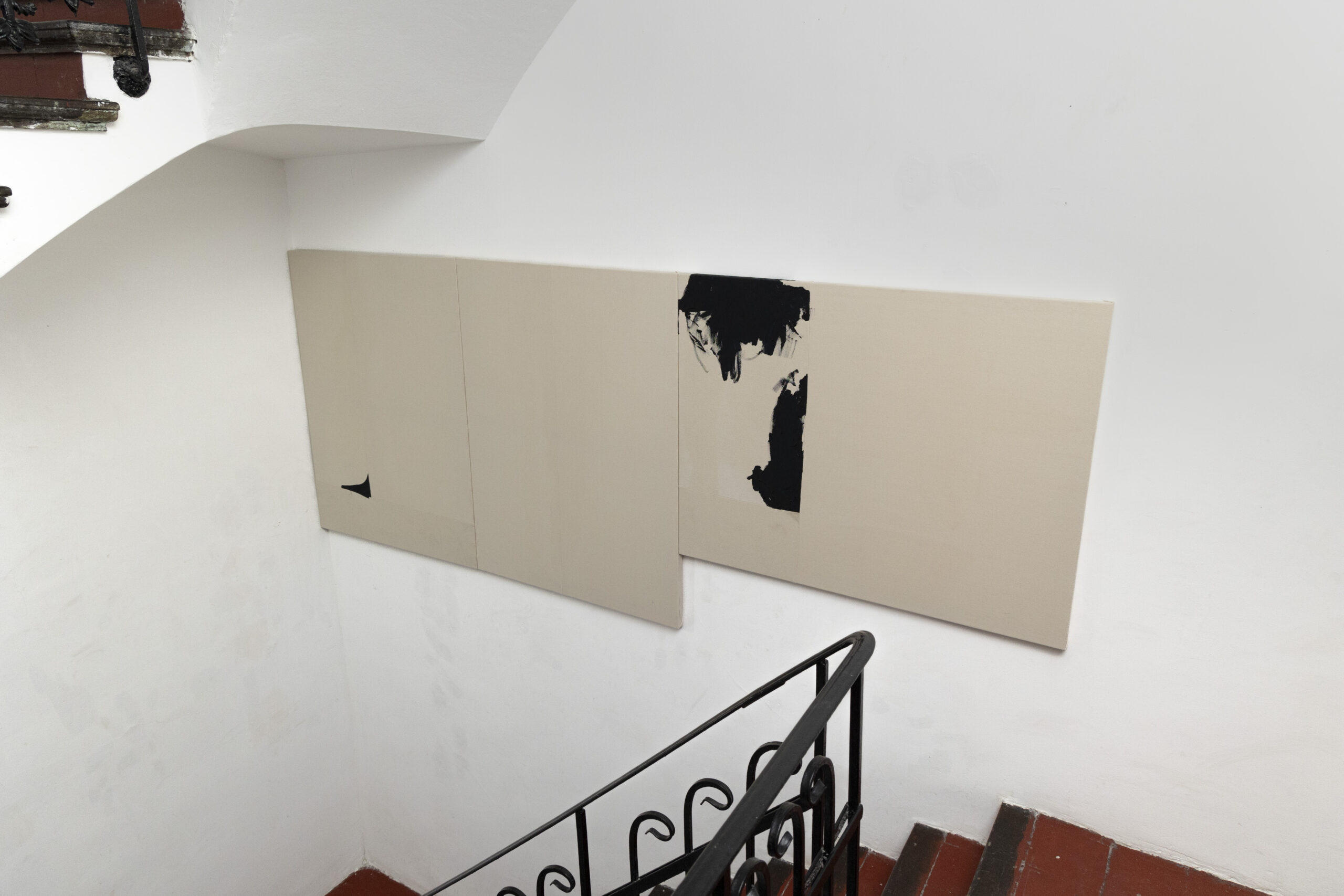
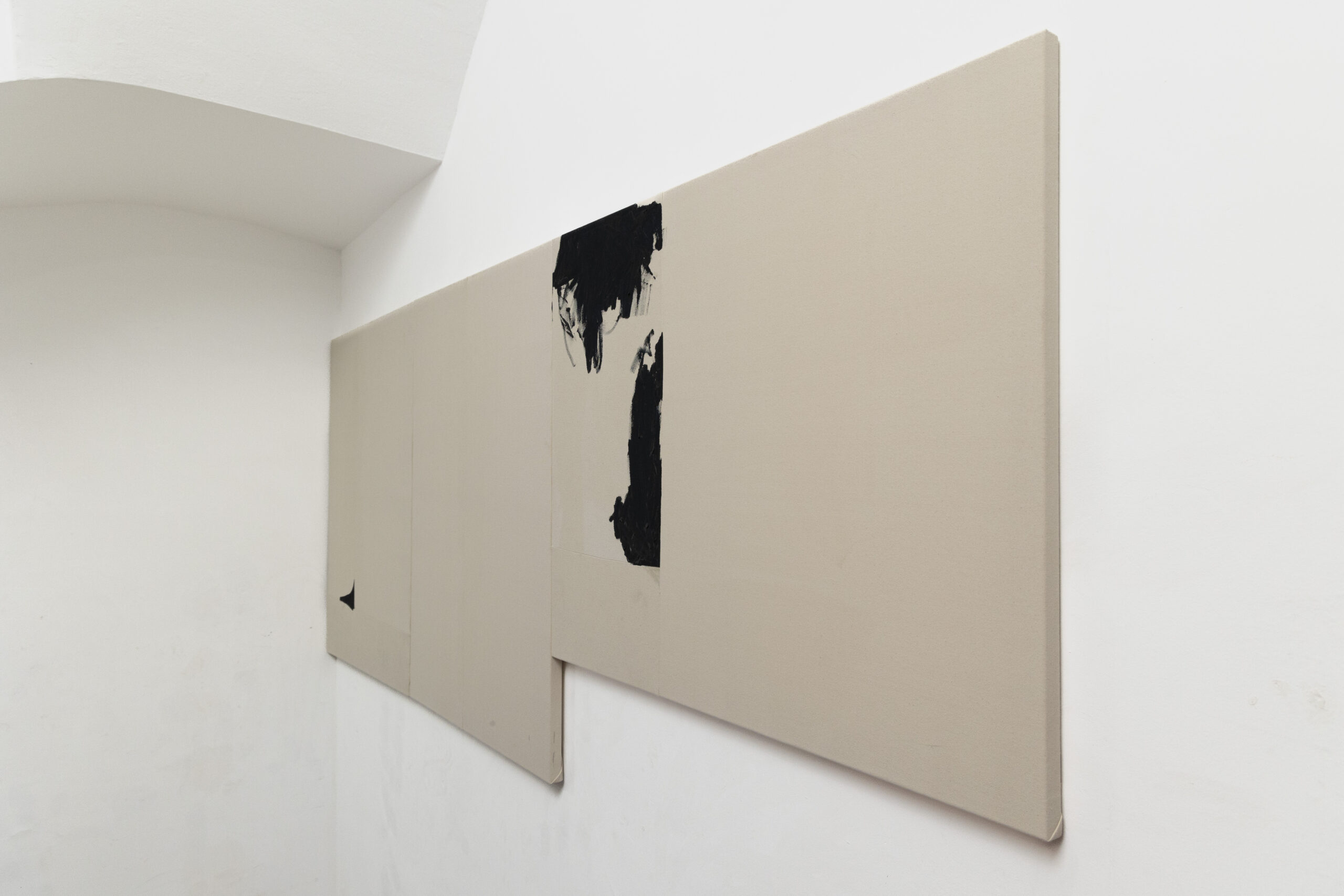
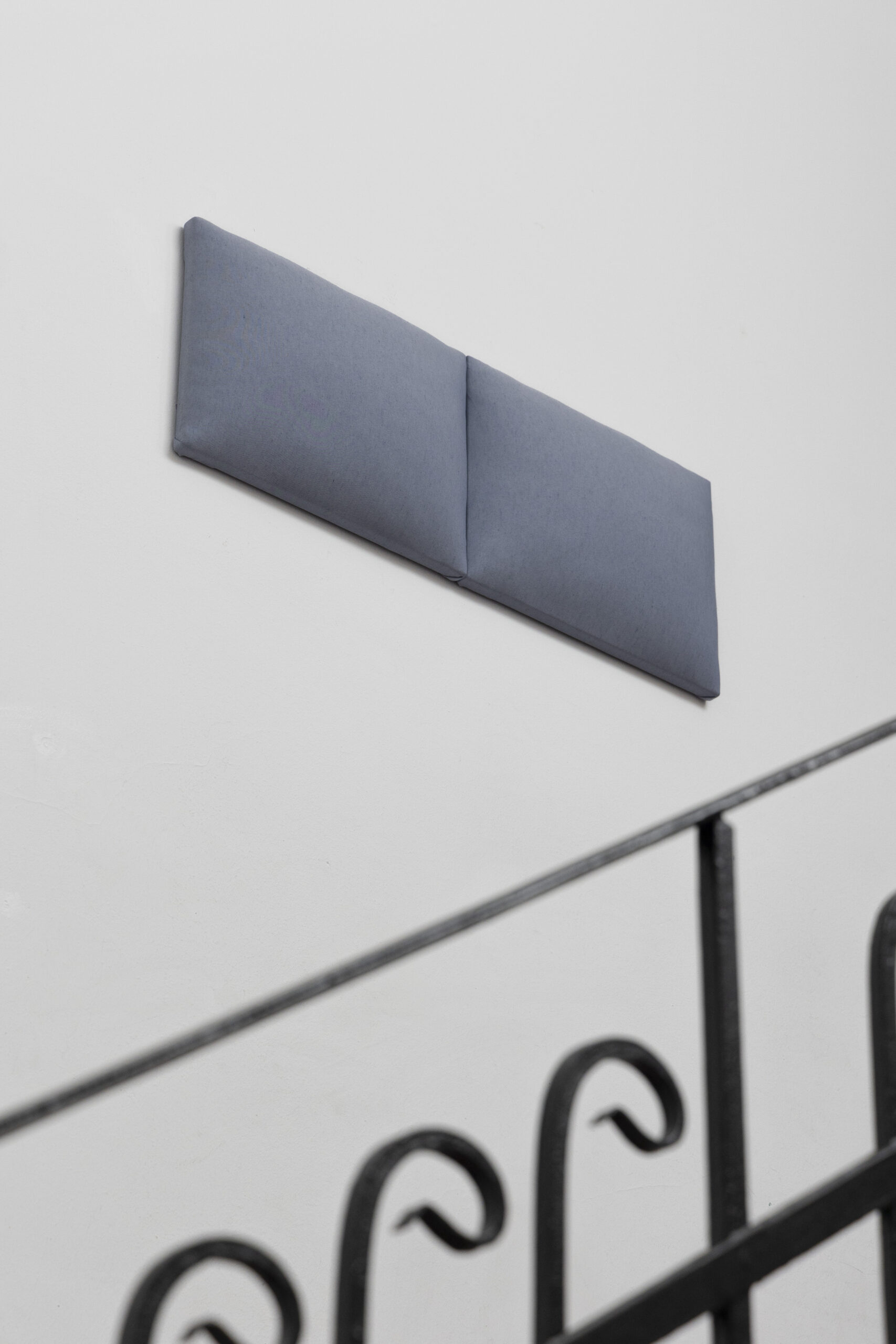
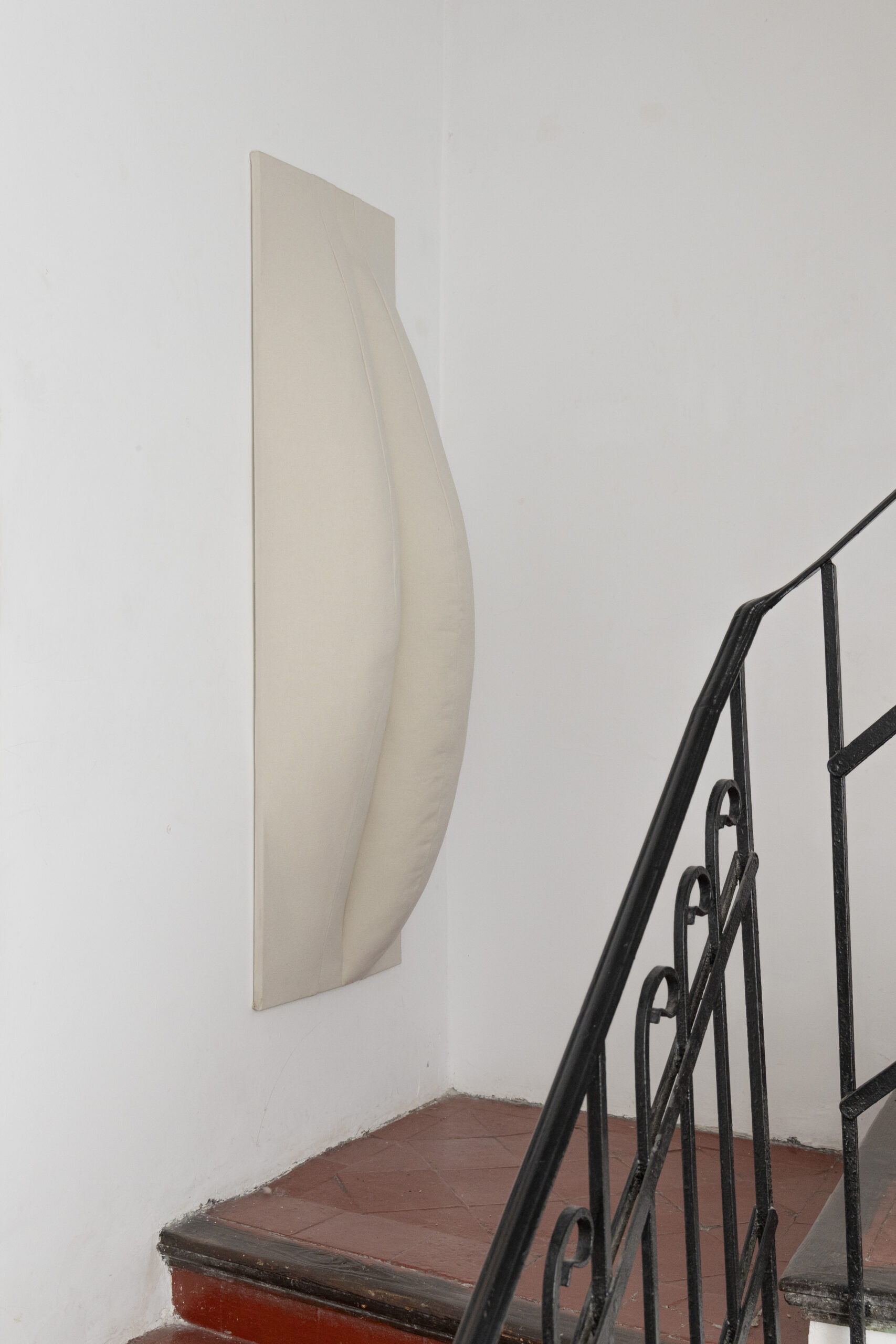
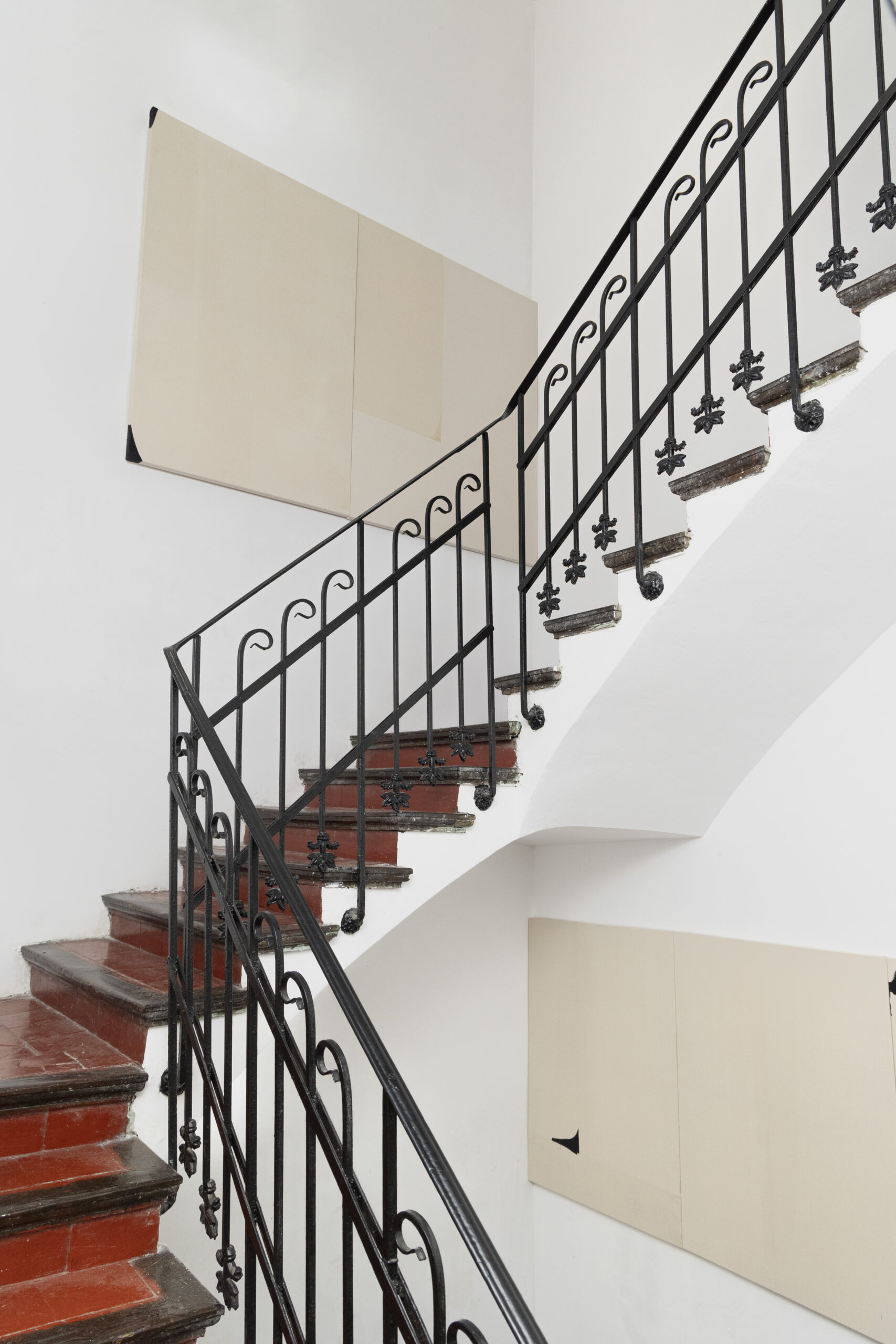
Perhaps the doubt that assails us is whether anything can still be expected from what we promise or whether, ultimately, promises still exist. If time were still a place of promises, we would at least be granted a moment of supreme lucidity—a moment in which everything that has happened to us is suddenly defined as the necessary unfolding of events. For Adela, painting is precisely that culminating organization of preceding moments, and everything that has led her to the canvas is a succession of simple gestures and actions unnoticed by others. What we see in Adela’s work is what would have preferred to remain unseen but now stands as the result of an action as simple as it is full of meaning.
II)
The vertex is the meeting of lines; the point is the corner. Truth is a collision of many contradictions and many lines. Perhaps that is why what is round and curved holds more truth than what is angular—because truth would be everything, and it can never remain still, like circles that embrace all things and have neither beginning nor end, and of which we cannot tell whether they move or remain static. Likewise, from a corner the view is closed, whereas from a circle it is panoramic; from a circle there is return, from a corner there is none.
Although every line sets a limit, we know that at the joint of a corner closure is more secure and the demarcation of spaces firmer. Vision is absolute and does not admit intermediates; whatever is halfway is half of something and therefore never becomes something in itself—like half a sphere or half a pyramid. Similarly, a circle can never be a square, nor a square a circle. If the corners of a square were curved, we would not know what it was or what to call it.
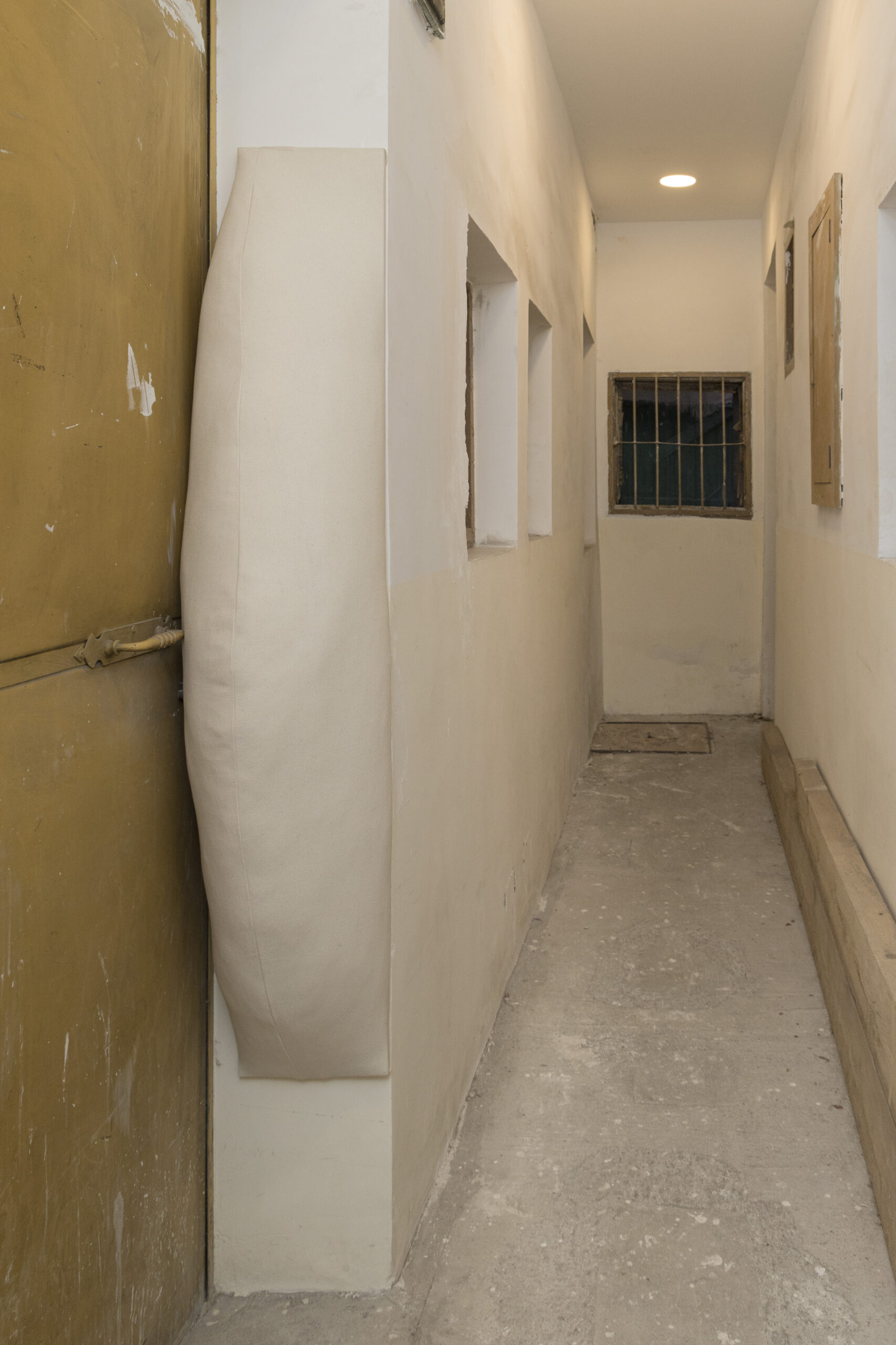
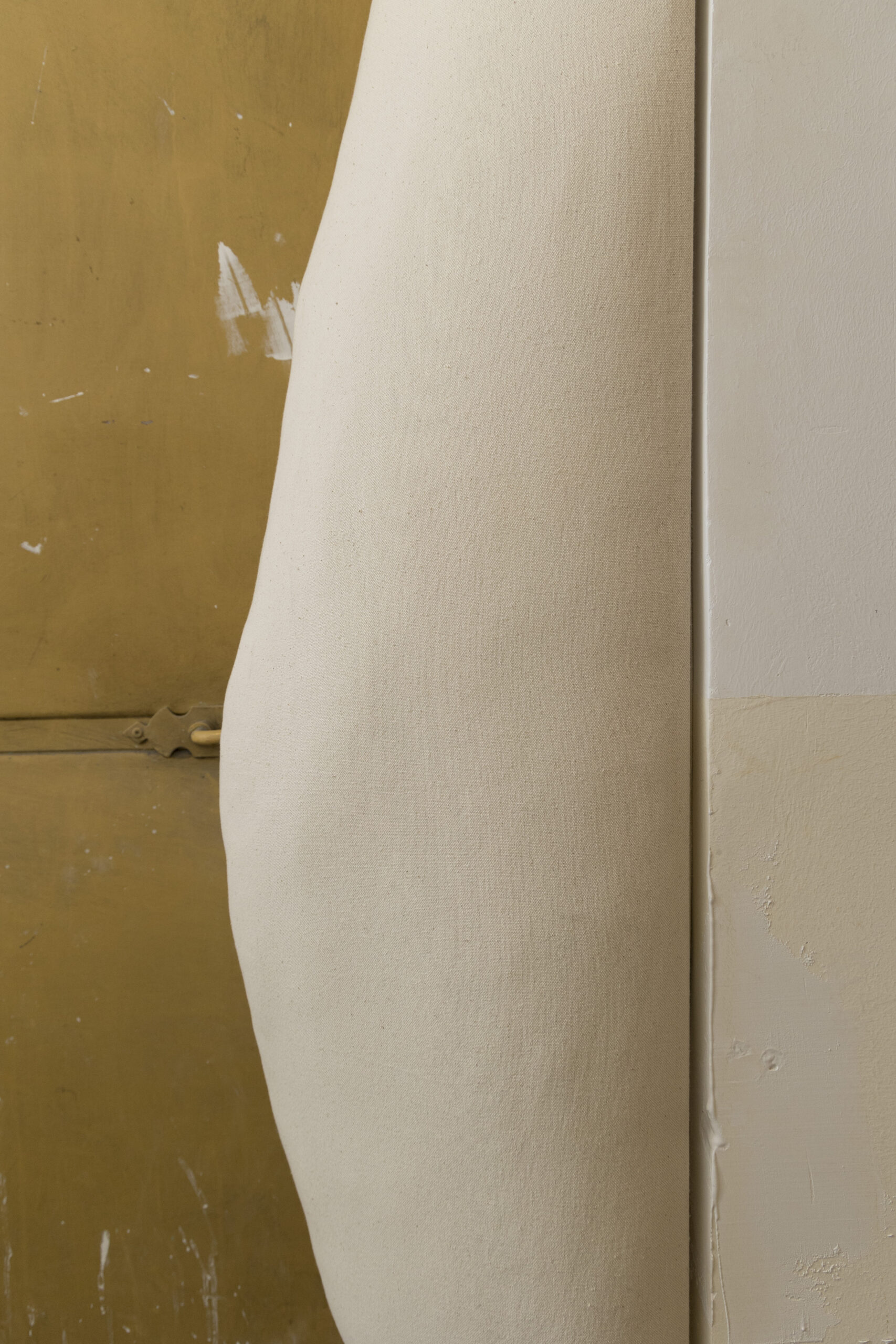
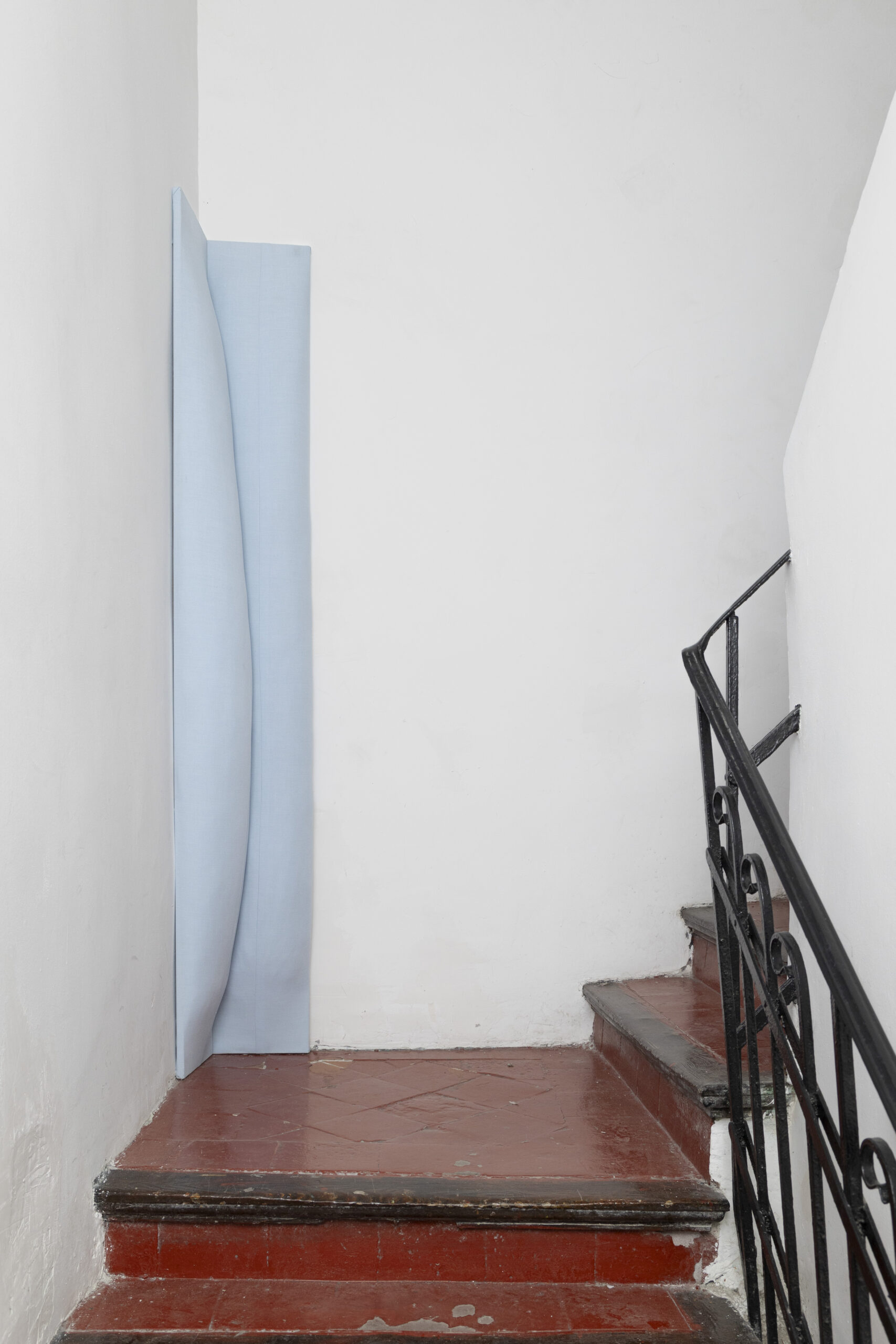
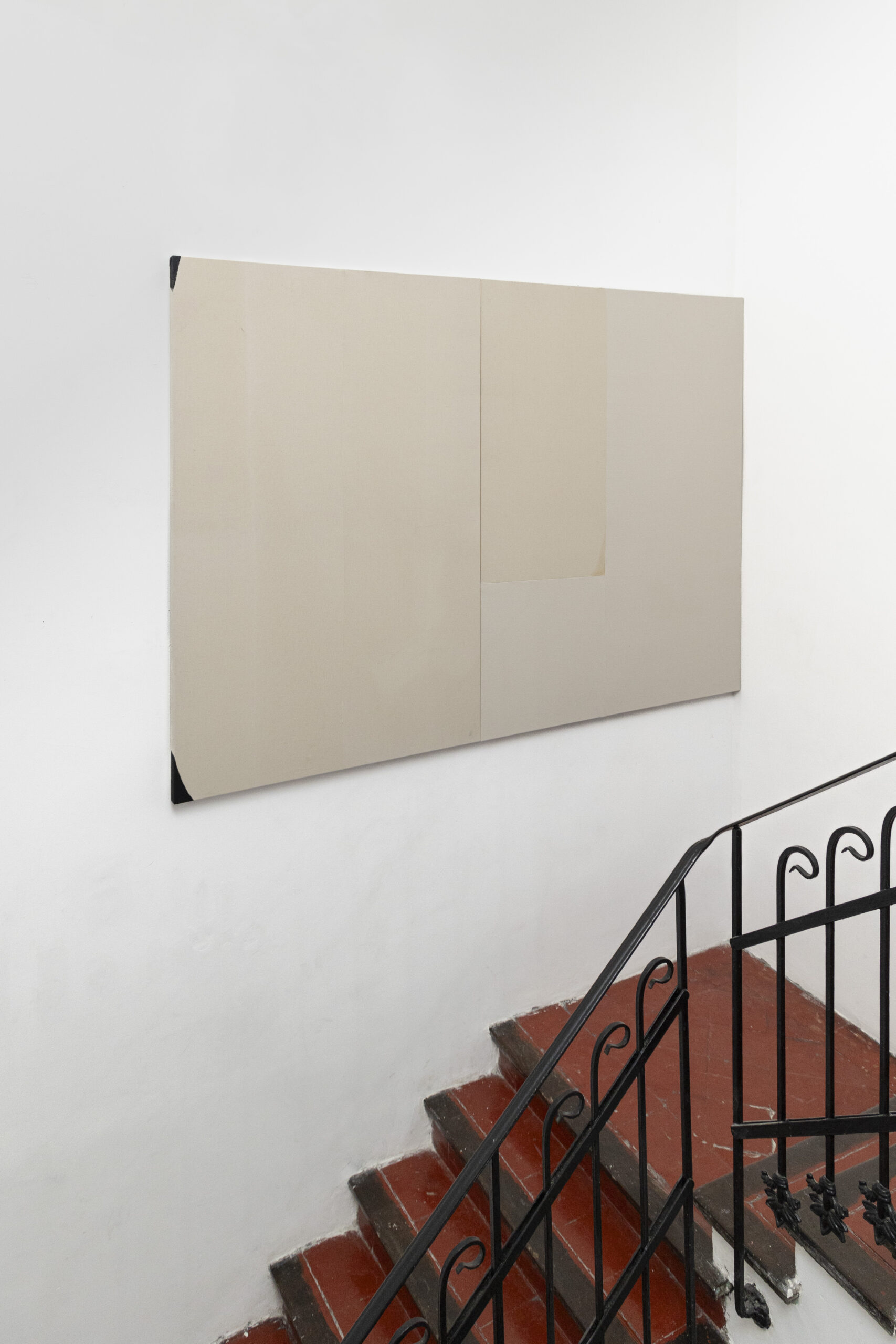
This is what it means to change something’s form and yet have it remain what it was—like taking a round knife and having it remain a knife even though it is round. To stand midway between being one thing and almost becoming another at the same time; to risk the essence of something by trying to turn it into its opposite, and yet to remain that very thing. That is a round knife. To hang by a thread, to stand on tiptoe upon the borderline; to make what is distant near and what is sharp soft. To round off the knife is to question something in order to bring it to its limit—like painting that bulges its canvas and moves away from the flat surface. Or like the corner that appears within the painting and, by curving, becomes a boundary within itself. Like painting that questions itself from within and for that very reason continues to be painting.
I)
El tiempo ha dejado de ser un lugar. No sabemos qué nos espera en él ni, peor aún, después de él. Y para esta noción utilitaria de las cosas, resulta inquietante no conocer el para qué de algo. Decir que de un tiempo se espera algo, es lo mismo que hacer del tiempo una proyección, cargarlo de unas connotaciones de futuro. La historia puede entenderse como un dispositivo organizador de futuros, que se alimenta de esperanzas, del cumplimiento de cosas que se dicen desde un presente que espera ser compensado más adelante. La historia no existiría sin promesas. La salvación es una promesa y la revolución también, y entre ellas la única diferencia es dónde se cumple con lo prometido, si en el más allá o en el más aquí. Quizá la duda que nos asalta es si cabe esperar algo de lo que prometemos o si, en definitiva, siguen existiendo las promesas. Si el tiempo siguiera siendo un lugar de promesas se nos concedería al menos un momento de lucidez suprema, un momento en el que todo cuanto nos ha sucedido se define, de pronto, como el desarrollo necesario de los acontecimientos1. Para Adela la pintura es exactamente ese culmen organizador de instantes precedentes, y todo lo que la ha llevado hasta el lienzo es una sucesión de gestos simples y de acciones inadvertidas para el resto. Lo que vemos en la obra de Adela es lo que habría querido mantenerse desapercibido pero que ahora es el resultado de una acción tan simple como llena de sentido.
(II)
El vértice es el encuentro de las líneas, la punta es la esquina. La verdad es un encontronazo de muchas contradicciones y de muchas líneas. Tal vez por eso lo redondo y curvado tenga más de verdad que lo esquinado, porque la verdad lo sería todo y nunca puede estar parada, como los círculos que todo lo abrazan y que no tienen ni principio ni final, ni se puede conocer si se mueven o son estáticos. Del mismo modo, desde una esquina la vista es cerrada y desde un círculo es panorámica, por eso desde un círculo hay retorno y desde una esquina no. Aunque toda línea limita, sabemos que en la juntura de una esquina el cierre es más seguro y la demarcación de espacios es más firme. La vista es absoluta y no entiende de intermedios, todo lo que sea medio es la mitad de algo y por eso nunca llega a ser algo en sí mismo, como la mitad de una esfera o la mitad de una pirámide. Igualmente, un círculo nunca podrá ser cuadrado ni un cuadrado círculo. Si las esquinas del cuadrado se curvaran no sabríamos qué sería ni cuál sería su nombre. Es el caso de cambiar algo de forma y hacer que siga siendo lo que era, como coger un cuchillo redondo y que aun siendo redondo siga siendo cuchillo. Estar a medio camino entre ser una cosa y casi llegar a ser otra al mismo tiempo, poner en riesgo la esencia de algo por querer hacer de ella su contrario, y con todo mantenerse siendo la cosa. Eso es un cuchillo redondo. Pender del hilo, estar de puntillas sobre la línea que es fronteriza, hacer de lo distante lo próximo y de lo punzante lo suave. Redondear el cuchillo es cuestionar algo para acercarlo al límite, como la pintura que abulta su tela y se aleja de la superficie plana. O como la esquina que aparece dentro del cuadro y que al curvarse hace de tope dentro de sí. Como la pintura que se cuestiona desde sí misma y que por eso sigue siendo pintura.
- Towles, Amor. Un caballero en Moscú. Trad. Gemma Rovira Ortega. Madrid: Salamandra, 2025 (colección Salamandra Narrativa)